
dBS Solutions enhances Daresbury Festival
dBS Solutions provided sound reinforcement for the dance-focused Daresbury Festival at Walton Hall and Gardens in Warrington, Cheshire, with all three stages powered by Martin Audio systems.


Round table: Sound for every space
From cavernous stadiums to intimate yet archaic concert halls, sound professionals face the constant challenge of adapting technology to deliver consistently exceptional listening experiences. This panel discusses the dos and don’ts of sounding out complicated venues


Brandon Heinz, Product manager, Renkus-Heinz
Fabio Kaiser The common challenges that arise revolve around versatility and architectural integrity. Historic venues were typically designed to serve one specific musical style. Today, however, they’re expected to accommodate a much broader repertoire, often revealing challenges such as insufficient projection of singers against larger orchestral set-ups, or significant variations between different audience areas (for instance, stalls versus boxes). On the other hand, large multipurpose halls often exhibit relatively dry acoustics, which provide insufficient support for unamplified music while performing very well for amplified productions. Variable and dynamic acoustic solutions are the key to transforming these spaces into adaptable, high-performance environments.
Our solution centres on the Amadeus Active Acoustics system and its geometric approach. Instead of superimposing a second environment, we change the acoustic properties based on the existing room’s unique signature. This means leveraging a detailed 3D model of the space to calculate early reflections and natural reverberation extension. We then create the customised presets, like symphony or voice lift, that allow the venue to switch instantly between ideal acoustic settings for concerts, lectures or rock shows, ensuring optimal sound quality uniformly across the space without compromising the original architecture.
Brandon Heinz Adapting to unique environments is one of the greatest challenges in live sound technology. Large-scale venues too often mean excessive reverberation, reflections from hard surfaces and difficulties maintaining consistent coverage across long distances. Meanwhile, Heritage venues present their own unique challenges. We work with many houses of worship where theirstrict architectural limitations and the reflective materials used can obscure speech intelligibility.
At Renkus-Heinz, we tackle these issues through precision, control and visually discreet loudspeakers. Our digitally steerable Iconyx arrays enable us to aim sound exactly where it’s needed toward the audience, while avoiding reflective surfaces as much as possible. Beam steering greatly improves clarity, especially in reverberant or acoustically sensitive spaces due to the incoherent precision and control. With both our Omnibeam algorithm and Rhaon software, we can quickly create optimised coverage patterns that are tailored to each venue to ensure even sound distribution.
Jeremiah Karni The biggest hurdle is always trying to maintain direct sound versus reflected indirect sound for the audience, while navigating the challenges of loudspeaker placement. Architectural choices are what typically define where speakers get placed.
Jeremiah Karni Adamson has made a lot of advancements in product design over the last four decades, beginning at the source by designing high output. This goes hand-in-hand with our highly optimised waveguides that allow us to start on a sound footing. Also, being able to map this in 3D has changed the way our industry specifies projects.
Brandon Heinz With innovations such as our Complex Conic horns and Coentrant transducer, engineers can now achieve powerful, full-range sound from small, visually discreet systems, freeing them from traditional limitations of size, placement and acoustics.
The introduction of the Iconyx steerable column in 2004 was a turning point, giving engineers precise control over sound direction through digital beam steering. Fast-forward to today, and our fifth-generation Iconyx systems, along with Omnibeam technology, lets engineers digitally aim sound directly where it’s needed, removing the trial and error once required. Planning live sound has become software-driven and predictive. Using Omnibeam and Rhaon control software, integrators can model a room, define audience areas and automatically generate optimised beam patterns. This has dramatically reduced set-up time and minimised the need for acoustic treatment.
"Historic music venues were originally designed to serve one specific music style"
Fabio Kaiser Advances in digital signal processing (DSP) have transformed execution by enabling a geometric approach to active acoustics. Our core technology utilises a proprietary 3D model of the venue, so we can generate reflections that naturally complement the room’s existing acoustic signature, rather than relying on measured impulse responses that can lead to ‘dual-sloping’ artifacts seen in other systems. This level of DSP precision allows fine-tuning of nearly all essential acoustic parameters, such as reverberation time (T30), clarity (C50/C80) and strength measure (G).
Brandon Heinz We recently carried out multiple installations at the University of Toronto Scarborough’s brand-new Sam Ibrahim Building, which presented a series of unexpected acoustical challenges. The building features six unique lecture theatres, each with distinct architectural designs, from irregular ceiling angles to reflecting materials and unconventional seating layouts. Ceiling or pendant speakers were not an option due to structural limitations, leaving only limited wall-mounted positions for loudspeakers.
To overcome these obstacles, we used a combination of Renkus-Heinz UBX8 passively steered columns and CX61 point-source loudspeakers. In several rooms, we adapted our approach by stacking and rotating additional UBX8 units 180°, effectively extending coverage and maintaining intelligibility for students seated in the upper rows. The UBX8 loudspeakers have inherent downwardly biased coverage thanks to Passive Unibeam technology, which enabled effective control of the lower seating areas. The units flipped 180° vertically enabled effective coverage for the upper seating areas without compromising on intelligibility.
In the hexagonal Arrow Innovation Hall, where a suspended loudspeaker cluster would have blocked sightlines, we decided to mount multiple CX61s among the perimeter, carefully aimed to deliver balanced coverage across all seating zones.
Fabio Kaiser A challenging project that required significant adaptation was the re-staging of Mozart’s Requiem for the Wiener Festwochen in Halle E at the Museums Quartier, Vienna. The venue had a naturally short reverberation time of just 1.3 seconds, and yet the artistic director, Romeo Castellucci, still requested a wide variety of acoustic settings to work with. A non-negotiable of his artistic vision was no performers, including the choir and soloists, could wear wireless microphones, requiring freedom of movement on stage.
To adapt, we used the Amadeus system, employing 3D modelling to transform the hall into an immersive hybrid orchestral and theatrical setting. We were able to leverage directional microphones strategically positioned above the stage, forgoing the need for body-worn mics, ensuring the cast could move freely while their voices were still captured naturally for the active system.
Jeremiah Karni Several smaller venues around the US have a certain aesthetic that must be maintained, where the audience balcony is close to the arrays. In this case, the consultant and designer rely on the ability to put subwoofers in the middle of the array to avoid direct proximity SPL to VIP seating, maintaining the coupling of the array. We were able to leverage the in-speaker DSP to make a less-than-ideal configuration work for the environment. Ultimately, audio is often a perfect series of compromises.
Fabio Kaiser Optimal performances rely on a highly structured, collaborative process from the initial design phase to long-term maintenance. Collaboration begins with the manufacturer providing design support, system layouts and specifications that ensure architectural integration and transducer placement are optimised for the geometric approach. The systems integrator is responsible for proper cabling and installation, thoroughly inspecting their work before the manufacturer’s personnel arrive.
The most critical phase is the tuning process, done by our certified Amadeus technical team. It requires both musical and technical expertise and is conducted in close collaboration with the venue’s crew, who contribute their intimate understanding of the hall’s unique requirements and artistic character. This tuning proceeds in phases: first, technical calibration and basic preset set-up, followed by artistic tuning (fine-tuning by ear) in collaboration with the musicians and artistic directors. Finally, to ensure long-term consistency in real-world use, services like Amadeus Care include yearly system health checks and re-tuning packages, such as a confirmation or adjustment round three to six months after the initial commissioning, based on feedback from users and performers.
Jeremiah Karni Like learning an instrument, we are all actively going to venues, having discussions and looking at all the challenges that we are faced with. It takes a lot of practice and continuous experience.
"Optimal performance relies on a focused, collaborative process from initial product design to show-day sound engineering"
Brandon Heinz Close collaboration with engineers is crucial to ensuring technology performs at its best in real-world applications. We value their feedback, drawing on their experience with acoustical challenges, installation constraints and user needs to guide our product development. Those insights directly shape innovations such as our Omnibeam and Rhaon software, which simplify set-up, enhance performance and extend system lifespan.
Every project has unique challenges, so we design loudspeakers with flexibility in mind. The core technology that powers our high-end steerable columns like Iconyx and IC Live X also powers more value-orientated loudspeakers like our pre-steered UBX columns, ensuring consistent results in venues of any size.
This user-focused approach pairs with long-life components, rigorous testing and a future-proof design to guarantee reliability in demanding conditions. The more intuitive our technology is, the more effectively engineers can achieve precise, clear coverage across diverse environments with minimal tuning.
Brandon Heinz Immersive Audio is a powerful tool for flexibility, letting spaces transform instantly to suit different types of events. A great example is our recent large-scale installation at Vilco, a modern congress centre in Frankfurt. Its Grand Hall can hold 1200 people and be scaled for various configurations. The system includes an optional Immersive Audio module supporting 3D formats such as Atmos 5.1 or 7.1.4, so the hall is prepared for future productions.
Jeremiah Karni I don’t personally like how AI has been managed as a tool, but I can see machine learning being useful. But really, it seems unfair to take the human element away from live events. On a positive, the emergence of spatial audio, and the toolset it gives designers for creating dynamic and engaging shows, is certainly exciting.
Fabio Kaiser Immersive audio and the increasing intelligence built into DSP workflows will have a profound impact. We’re already pioneering advancements in spatial audio via our Art platform, with modules like Art::IP (Immersive Performance) designed for advanced sound control in large venues.
Through Smart Source Modes, the system can dynamically optimise spatial processing on a per-source basis, therefore aligning with the specific acoustic and directional requirements of live performers, high-power frontal reinforcement, localised effects or spatial surround reproduction.
The proprietary Amadeus Autotune system can carry out the technical calibration of every acoustic preset automatically, without user intervention. Paired with rigorous acoustic simulation tools like Ease 5-SE that verify coverage criteria such as loudspeaker overlap and density, the system ensures acoustic quality and consistency long before installation is complete.
Fabio Kaiser When facing architectural limitations, we prioritise near-invisible integration, so that microphones and speakers seamlessly blend into the architecture, preserving the visual and functional integrity of the historic space.
To meet artistic intent, we utilise our active acoustics system to provide dynamic flexibility, supporting the show’s creative vision through tailored acoustic presets developed collaboratively with musicians and directors. For instance, the system can instantly transition from intimate chamber acoustics to expansive cathedral-like reverberation to heighten dramatic effects.
Crucially, the system’s geometric modelling ensures technical feasibility doesn’t detract from the artistic result. The calculated reflections naturally blend with the existing acoustics, making the audience virtually unaware that an enhancement system is in use. This foundational transparency ensures that, regardless of constraints, the sound delivered is impressively organic and immersive.
Brandon Heinz We approach every project with the goal of delivering pristine, intelligible sound without compromising on design or intent. Our loudspeakers are engineered for both acoustic precision and architectural harmony. Being compact, discreet and aesthetically adaptable means sound enhances the space rather than drawing attention away from the main event.
With technologies like Omnibeam, we can direct sound towards the audience while minimising reflections from walls, ceilings and glass surfaces. Furthermore, unlike traditional point source boxes or line arrays, steerable columns have a slender, narrow form that lets them visually blend into a space’s architecture. This marriage of sleek design and advanced precision audio ensures clarity and consistency, even in acoustically challenging or visually sensitive venues.
Business development manager, professional audio, Sennheiser

Kevin Gwyther-Brown, Business development manager, professional audio, Sennheiser
Our approach to any new project is the same: we always consider all technologies that may be present, not just those related to RF. On-site RF scans and spectrum sweeps are sometimes required and are extremely valuable. Our focus is on developing and producing equipment that is not only reliable but also flexible to be deployed in any environment.
Wireless ecosystems are becoming less complex. We are bringing ecosystems like Spectera to the market that simplify RF planning and management. Software such as Soundbase makes workflows easier. The ability to manage spectrum deployment across multiple brands, and even control these systems in a live environment, makes engineers’ lives simpler. Features such as live chat in a Soundbase project further enhance collaboration before and during an event.
Spectera offers significant benefits for these types of deployments. For example, using antennae that run on Cat 5 cable enable runs of up to 100 metres without worrying about RF loss or thick cabling as was previously required. These can also be converted to run up to 4km on fibre, ideal for venues with long or complex cable paths.
Additionally, the system now requires less rack space. A single, 1U Spectera base station can facilitate up to 64 channels of audio (32 in, 32 out) and four antenna ports, making deployment not only easier but far more flexible and stable in these environments.
Read our previous roundtable on installations.
This feature was first published in the Winter 2025 issue of LIVE.
dBS Solutions provided sound reinforcement for the dance-focused Daresbury Festival at Walton Hall and Gardens in Warrington, Cheshire, with all three stages powered by Martin Audio systems.
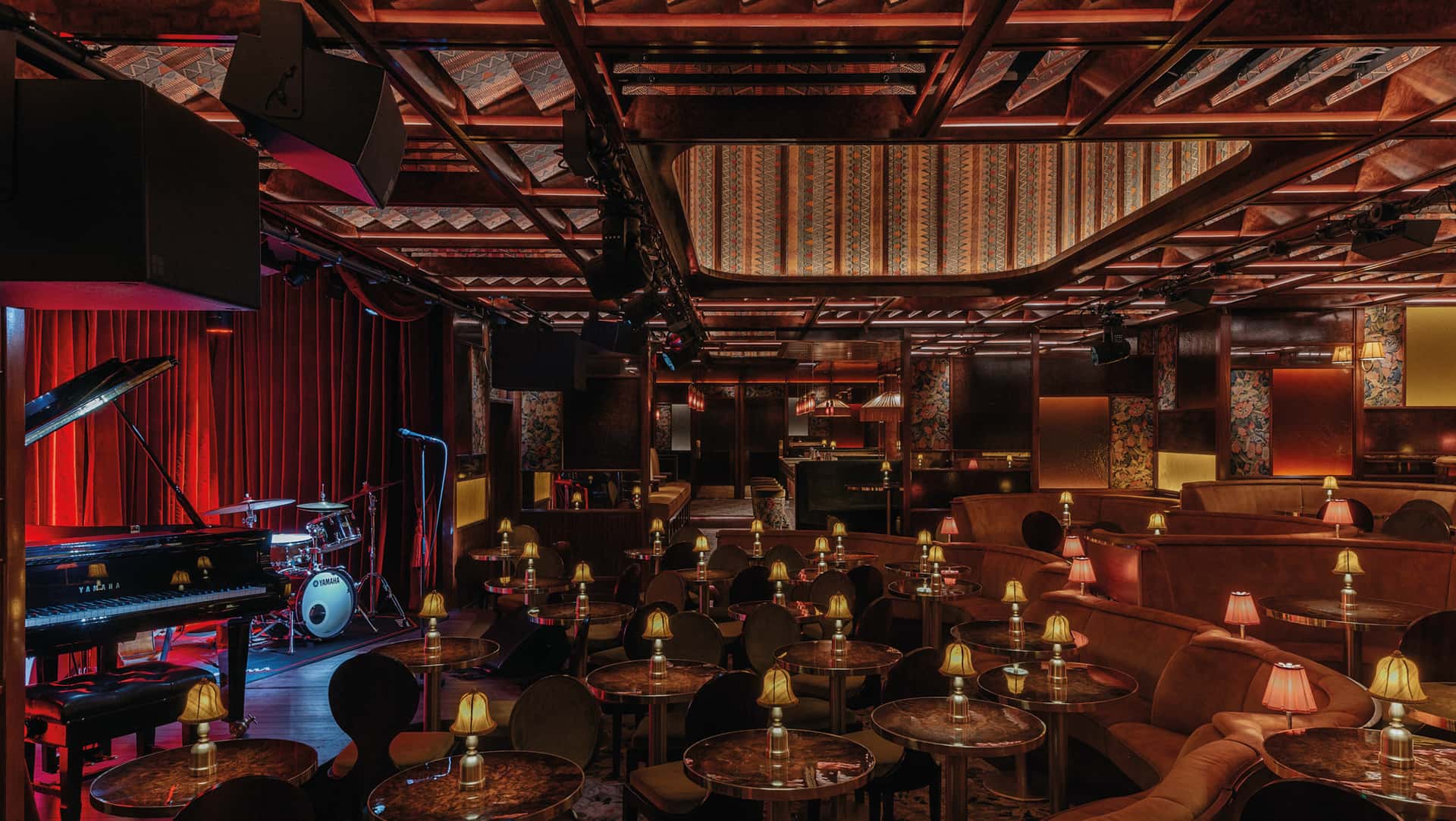
When your venue has welcomed everyone from Miles Davis to Amy Winehouse, standing still isn’t an option. The most recent Ronnie Scott’s redevelopment proves even an icon can evolve
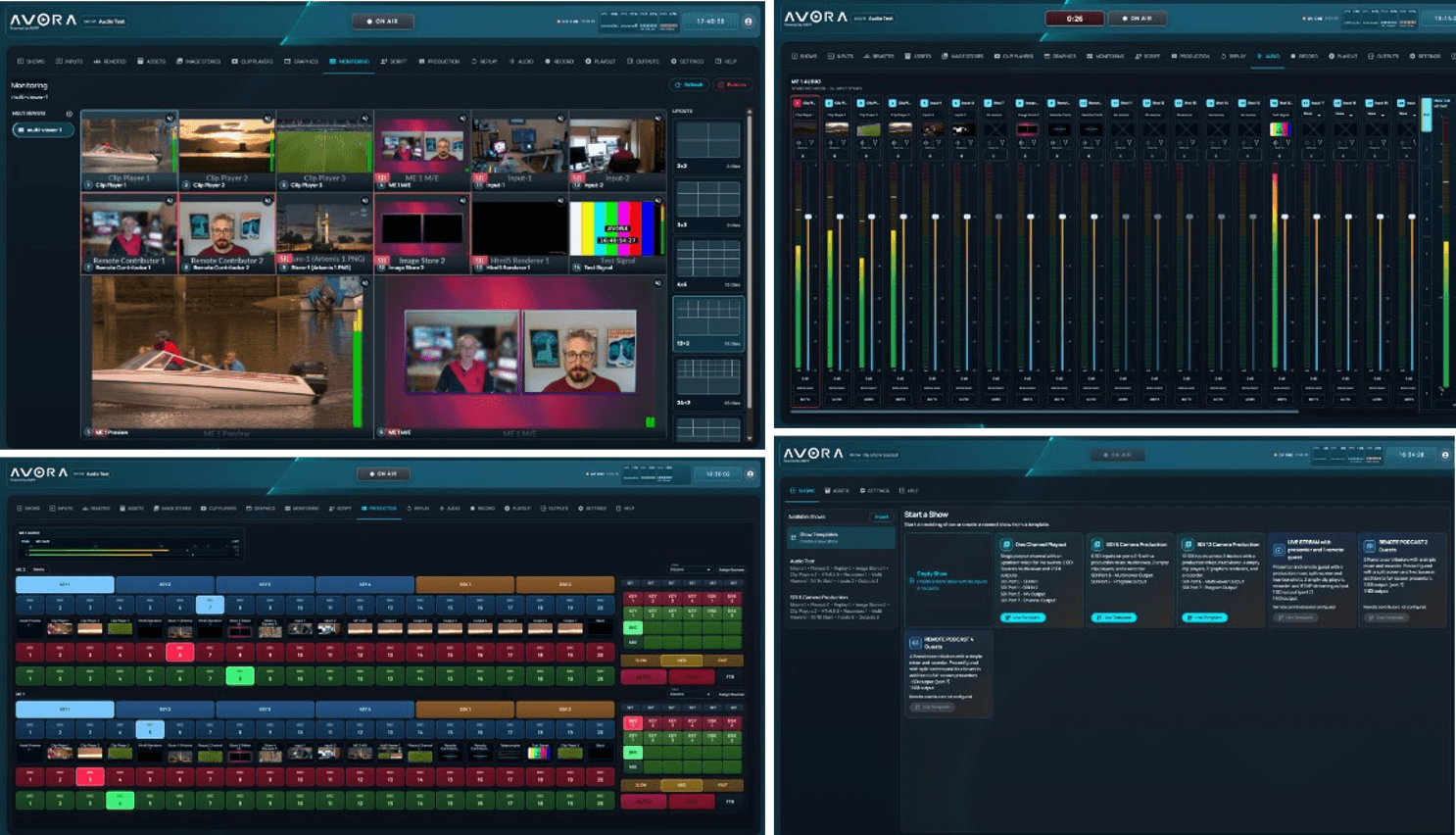
Launched at IBC2026, AVORA gives production teams a complete environment to prepare, produce and deliver live content, from switching and graphics to audio, remote guests, content, replay and delivery.

Tim Burton’s cult classic Beetlejuice has found new life on stage. But recreating its surreal world takes much more than clever costumes and scary set designs

Recently acquired by Panasonic, Hive is entering a versatile new era. CTO Dave Green sits down with LIVE to discuss what this move means for the wider pro AV industry