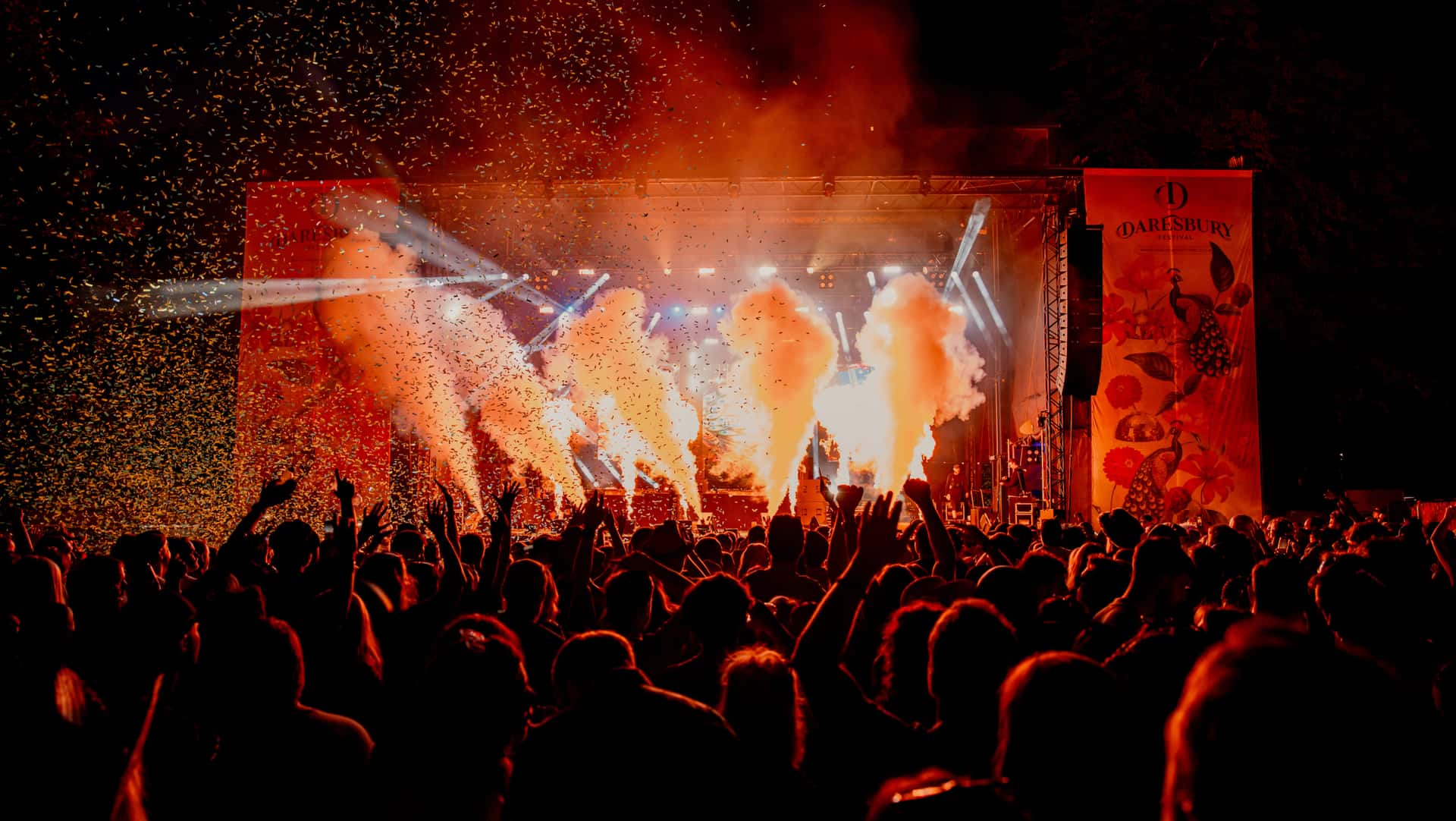
dBS Solutions enhances Daresbury Festival
dBS Solutions provided sound reinforcement for the dance-focused Daresbury Festival at Walton Hall and Gardens in Warrington, Cheshire, with all three stages powered by Martin Audio systems.


Las Vegas, Nevada, USA – August 01, 2022:Sunny view of the construction site of MSG Sphere
From houses of worship and corporate boardrooms to music festivals and immersive experiences, the scope and complexity of pro AV installations is continuously growing. This panel discusses the best practices and tips that can take your next big project from blueprint through to breakthrough


Scott Lau, Technical project manager, Disguise
Scott Lau When approached with a new project, it’s essential to fully understand what the client’s vision is and what they are trying to achieve. Beyond technical details, we must first understand what this project aspires to achieve for those who attend and experience it.
Once the client’s vision is fully understood, we can begin to work with our technical team to determine exactly how we’re going to accomplish this, given factors like budget, time frame and building needs.
From day one until the end of the project, clear, consistent communication with the client is key. This allows us to grow and foster the relationship, position ourselves to be responsive, prepare for anything that could impact the project, and maintain harmony across teams (very important!).
Fabio Kaiser The best first step in any new project is always to deeply understand the client’s vision and the specific utilisation scenarios of the space. We begin by defining what the room will be used for; whether it will be classical concerts, symphonic performances, chamber music, lectures, spoken theatre, or even electroacoustic performances. This ‘initial needs analysis’ is critical, as it directly influences the specific acoustic requirements and the goals of the system design.
For us at Amadeus Acoustics, this also means understanding the existing acoustic signature of the room, which is characterised by its reflection patterns and natural reverberation. Our aim is not to superimpose a new, artificial room, but to actively change and complement the existing acoustic properties to achieve the desired sound impression. This requires detailed information on architectural and acoustic parameters such as floor area, volume, average reverberation times and background noise levels. As we’re brand agnostic, we support the design team by providing guidelines for loudspeaker and microphone choice (leaving the choice up to the client), placement, as well as seamless integration into the existing architecture. The ultimate goal from the outset is to design a system that is exceptionally stable, doesn’t colour the sound, avoids noise disturbances or feedback and preserves the natural spatial localisation of sound sources.
Only by clearly and collaboratively defining these aspects can we lay a robust foundation for a successful and artistically resonant AV set-up.
Christopher Weatherford As a manufacturer, we’re in continuous contact with consultants and integrators. When approached by an integrator for an install, asking questions is key. Is this the right project for our products? What is the venue looking for: the highest quality possible for critical listening or a solution with strict budget-constraints? If any financial restraints result in a compromise that wouldn’t represent what an Adamson system is supposed to sound like, we’re not the right party.
We also ask questions like what is the time planning? What is the total scope and goal of the install? Which other brands are considered for this project?
We have a highly-skilled team of application engineers based at our headquarters and around the globe, who will work together with the customer by reviewing designs and suggesting solutions, as well as commissioning the system upon install, working together with the integrator.
Fabio Kaiser Planning an AV installation, especially for active acoustics and immersive audio, presents several common challenges. One significant hurdle is seamless architectural integration and aesthetic constraints. We often encounter historical venues with complex architectural features, varying reflective and absorptive surfaces and low-ceilinged balconies, all of which demand tailored solutions without compromising visual integrity.
Another challenge lies in dealing with existing acoustic anomalies, such as excessive natural reverberation or disturbing echoes and flutters, as active acoustic systems cannot reduce reverberation or cancel out these fundamental flaws; they can only mask them by increasing reflection density.
Ensuring that the system maintains natural sound and localisation without superimposing an artificial sound or causing instability, noise or feedback is paramount. Achieving uniform sound coverage and sufficient speaker and microphone density across diverse audience zones, including acoustically different areas like under-balconies and boxes, can also be complex, as too few speakers can severely limit system tuning capabilities. Finally, avoiding microphone noise amplification from other technical installations like projectors or ventilation systems is crucial for sound quality.
"The best first step in any new project is always to deeply understand the client’s vision and the space’s specific utilisation scenarios"
To avoid these challenges, a thorough and collaborative initial planning phase is essential. We advocate for designing the passive room acoustics to be as dry and balanced as possible from the start, ensuring low background noise and no inherent acoustic defects. Our geometric approach, which utilises a 3D model of the existing architecture, allows us to calculate the reflections that inherently blend with the room’s natural acoustic signature, preventing the often-criticised dual-sloping seen in other systems. We use 3D modelling and simulations (such as in EASE 5 Second Edition) to evaluate loudspeaker layouts, predict coverage and ensure there is optimal density and sound pressure levels before physical installation.
Moreover, we rely on highly qualified and certified personnel – the Amadeus Tonmeister team – who bring both technical and artistic expertise to every stage, from design to fine-tuning, ensuring solutions aren’t just technically sound but also artistically satisfying.
Scott Lau Common challenges that I’ve experienced have been moving goalposts or changing deliverables. As stated in the first question, we need to ensure we are aligned with the client as to what their vision is and they need to be aligned and informed as to the solution that we’re presenting.
We can aim to mitigate and avoid contentious challenges by maintaining consistent communication throughout the life of the project.
Christopher Weatherford Last minute changes in the design can be disruptive, especially when lead times are short, which is often the case with installs. Sports arenas for instance only have very limited windows of opportunity to get a sound system installed during the off-season. To prevent last-minute requests, I’ll circle back to asking the right questions at the start of the project. Preparation is essential. ‘Where are the trapdoors?’ as a mentor used to tell me.
Christopher Weatherford Balancing creative vision with technical reality is one of the most critical, yet rewarding parts of the process.
Often, the visionaries driving a project have ambitious goals for how the space should sound and feel, but might not be fully aware of the mechanical, acoustic or budgetary constraints that come into play. Our role as a manufacturer is to listen closely to those goals and work collaboratively to design a solution that aligns with them, while still respecting the physics of acoustics and practicalities of deployment.
This is where strong partnerships with consultants, integrators and our in-house support team are essential. We model various scenarios in our design software, walk through trade-offs in system coverage, aesthetics and budget and work together to preserve as much of the original vision as possible.
Ultimately, our goal is to deliver a solution that exceeds expectations in performance, user experience and reliability, even if the final design looks different from the first sketch.
Fabio Kaiser Balancing creative vision with technical limitations is at the heart of our philosophy at Amadeus Acoustics. It fundamentally relies on a deeply collaborative and iterative approach. We believe that technology should serve art, not constrain it. Our co-founders are all musicians, acoustic consultants and audio engineers, bringing a blend of technical innovation and artistic insight.
The process begins by clearly defining the artistic and functional requirements for the space – what experiences do musicians, performers and audiences envision? Our system is designed for flexibility and dynamic control, so that essential acoustic parameters such as reverberation time, early reflections and clarity can be freely and dynamically adjusted. This enables an acoustic environment that can change seamlessly within a single production to heighten dramatic effects, as shown at the Theater an der Wien (a big opera house in Vienna, Austria), where presets were fine-tuned scene by scene to match artistic intent.
A key technical enabler is our brand-agnostic philosophy. Instead of proprietary hardware, we recommend and integrate the best-performing equipment, tailored to the architectural and acoustic needs of the venue. This avoids vendor lock-in and allows us to select components that maximise creative possibilities, while respecting physical constraints.
Furthermore, our unique geometric modelling of reflections ensures that the active acoustics blend naturally with the venue’s existing characteristics, creating an organic, immersive experience where the enhancement is imperceptible. This maintains the integrity of the natural sound while still allowing for significant acoustic transformations, from smaller, intimate chamber settings to expansive cathedral-like reverberation or targeted 3D immersive soundscapes.
We prioritise fine-tuning by ear in collaboration with musicians and using technical measurements as a reference point for documentation rather than the sole arbiter of quality. This ensures that the technology ultimately serves the artistic expression.
Scott Lau The best way to balance creative vision with technical limitations is to be honest and candid throughout the entire process. We never put ourselves in situations where we promise something that can’t be guaranteed. Any limitations should always be clearly communicated with the client so they aren’t caught off guard by performance issues when they overload the system.
Read our previous roundtable on the future of projection.
This feature was first published in the Jul/Aug 2025 issue of LIVE.
dBS Solutions provided sound reinforcement for the dance-focused Daresbury Festival at Walton Hall and Gardens in Warrington, Cheshire, with all three stages powered by Martin Audio systems.
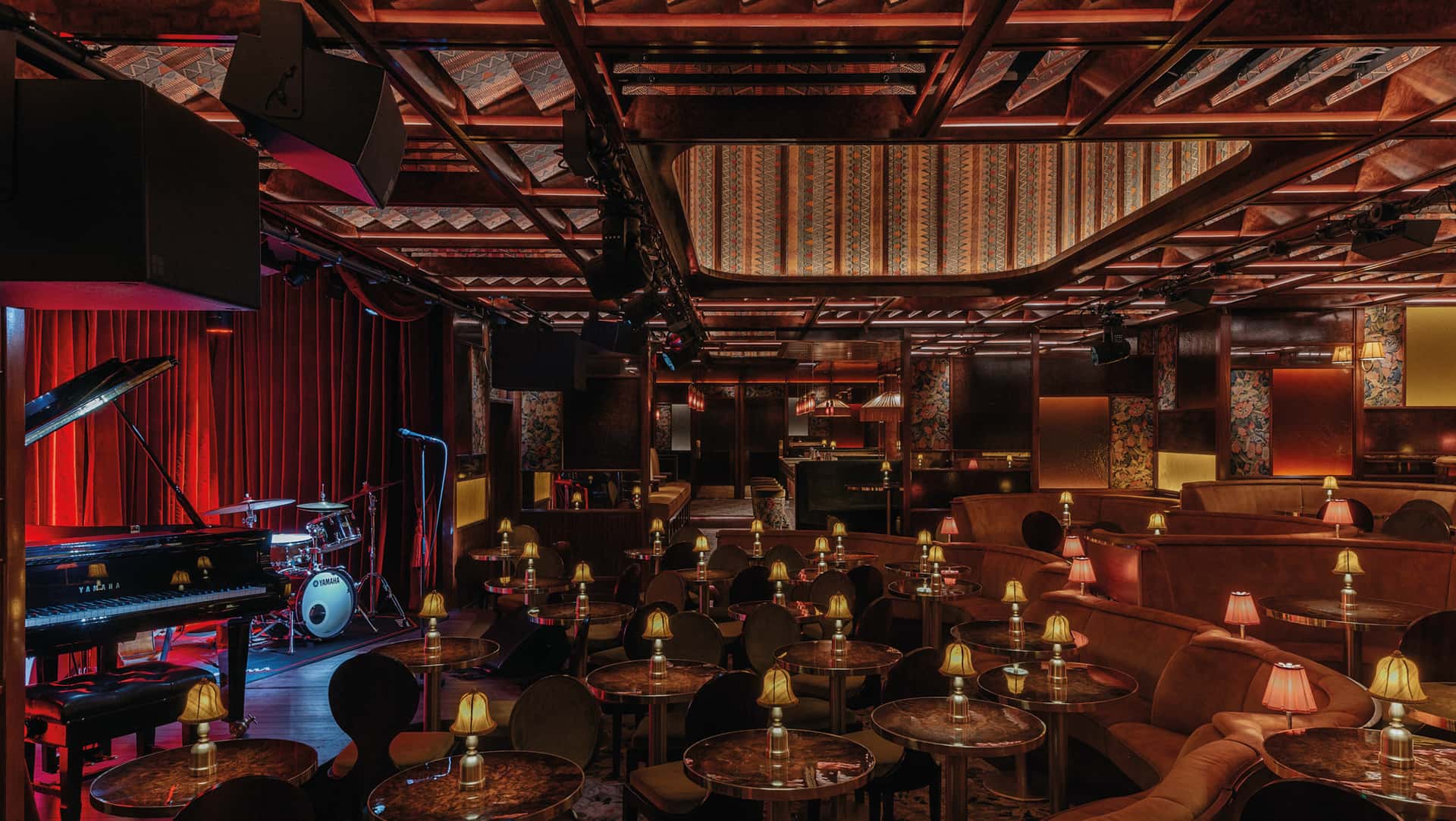
When your venue has welcomed everyone from Miles Davis to Amy Winehouse, standing still isn’t an option. The most recent Ronnie Scott’s redevelopment proves even an icon can evolve
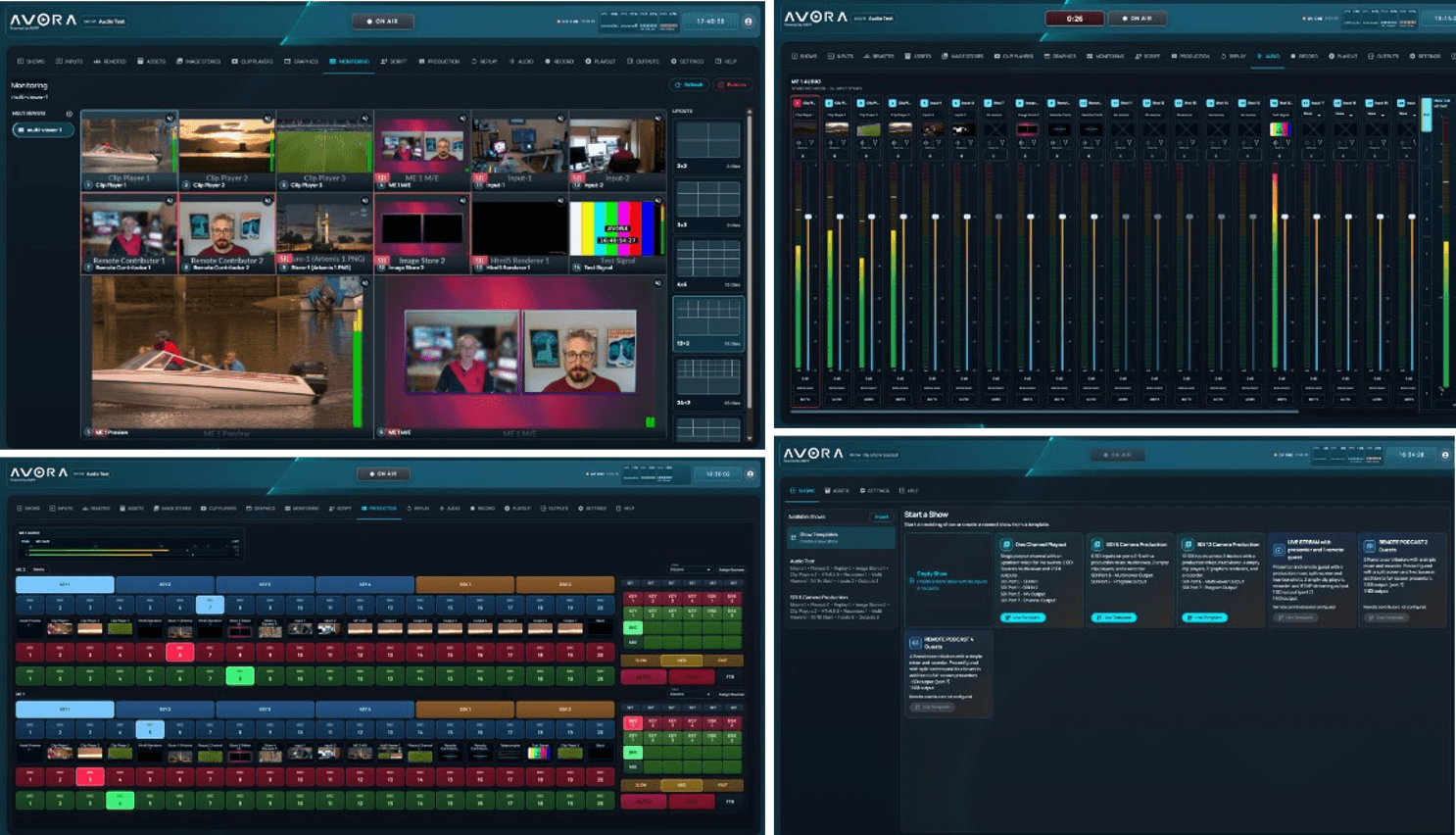
Launched at IBC2026, AVORA gives production teams a complete environment to prepare, produce and deliver live content, from switching and graphics to audio, remote guests, content, replay and delivery.

Tim Burton’s cult classic Beetlejuice has found new life on stage. But recreating its surreal world takes much more than clever costumes and scary set designs

Recently acquired by Panasonic, Hive is entering a versatile new era. CTO Dave Green sits down with LIVE to discuss what this move means for the wider pro AV industry