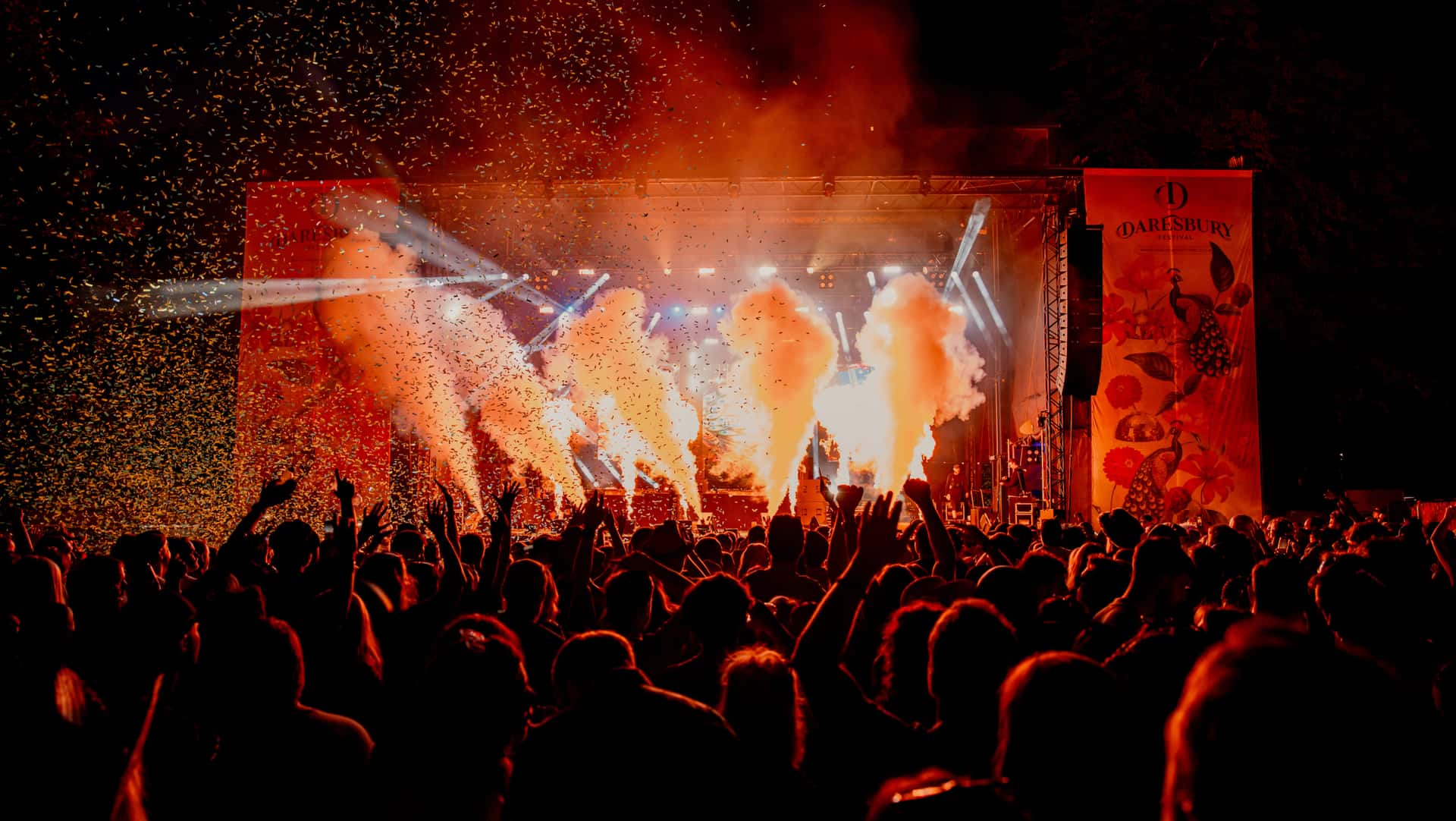
dBS Solutions enhances Daresbury Festival
dBS Solutions provided sound reinforcement for the dance-focused Daresbury Festival at Walton Hall and Gardens in Warrington, Cheshire, with all three stages powered by Martin Audio systems.


Sydney, Australia – 12 June 2022: Side-view of domes with light painted lizards on the Sydney Opera house at Vivid Sydney 2022 light show festival in night time.
What’s next in projection? This issue’s panel offers insider insight on trends, market shifts and the bright future of large format display technology
Joel St-Denis, Director of product management, Christie
Ian Scott, Vice president of Visual Systems Division, JVC
Yann Verhellen, Segment marketing manager, Barco
Hartmut Kulessa, Head of marketing visual systems for Europe, Panasonic Connect


Joel St-Denis, Director of product management, Christie
Joel St-Denis One of the most notable evolutions in the past decade has been the shift from lamp-based projectors to laser phosphor and RGB pure laser illumination. This transition has reduced the need for maintenance and bulb changes, which is particularly beneficial when faced with the challenge of hard-to-reach installations. This recent introduction of RGB laser technology has also elevated performance, colour accuracy and contrast for the best possible experience.
When it comes to colour reproduction, premium RGB laser 3DLP projectors can reach the Rec. 2020 colour space, while hybrid solutions can achieve DCI-P3 colour. For customers who want the best of the best in projection, this is where you need to look.
Progressing away from the regularly used Rec. 709, these innovative colour spaces offer a colour gamut closest to what our eyes can see, with increased volume and vibrancy.
At ISE 2025, Christie introduced the Sapphire 4K40-RGBH 40,000-lumen projector, which combines RGB pure laser and laser phosphor into one system, providing rear projection capabilities and DCI-P3 colour reproduction. This sets a new standard in 3D projection with Infitec colour comb 3D.
Ian Scott Over the last ten years, JVC projectors have seen tremendous growth in the aviation industry, and it’s expected that this expansion will continue. With growth comes the need for new technologies that address regulatory requirements as well as overall cost of ownership.
JVC’s simulation projectors are most widely used in the civil and military aerospace industries, in flight simulators. In addition, thanks to high resolution and unmatched native contrast performance, JVC’s projectors have also been popular in planetarium applications for years.
As the industry evolves, so do our D-ILA projectors through our continuous research and development to refine and advance the technology. And as the technology advances, so does the demand for higher resolution and the quest for eye-limiting visual fidelity. To meet that requirement, JVC introduced native 4K D-ILA devices for military simulation and planetarium applications back in 2010 – this was more than a decade before native 4K DLP devices were introduced.
This model, truly a reliable workhorse, has provided constant performance since then and is still being shipped to this day. JVC then introduced the first 8K e-shift projectors in 2013.
Fast-forward to 2025, and JVC has started delivering the world’s first 8K native projectors on a large and notable US Air Force programme, which contains the most advanced visual display systems ever fielded in a simulator.
We’re achieving more lumens per watt, meaning higher brightness with the same power consumption or similar brightness with reduced power, directly contributing to sustainable goals”
Yann Verhellen In the last decade, the projection industry has significantly evolved, both in terms of technology and the applications this enables. The largest technological shift was the move from lamps to laser diodes as the dominant light source in professional projectors. This has given birth to projectors that need no more light source replacements, are brighter, have a wider colour gamut and consume less power.
Evolutions in optics, electronics, thermal engineering and materials science have catered for ever smaller, lighter and brighter machines that can be fitted into a growing number of different applications.
On the application side, we’ve seen novel and creative uses of projection, such as large-scale outdoor mappings and immersive spaces. Projection has shown resilience through constant technological evolution and versatility of its use cases.
Hartmut Kulessa Projection technology has seen a major evolution in terms of performance, form factor and ease of use. Brightness levels have significantly increased while designs remain compact – our upcoming 40,000-lumen projector, for instance, fits in the same chassis as our current 30,000-lumen model. This evolution not only improves portability but also boosts brightness efficiency: we’re achieving more lumens per watt, meaning higher brightness with the same power consumption or similar brightness with reduced power, directly contributing to sustainability goals.
In parallel, manufacturers have introduced powerful software tools that simplify set-up and calibration, making installation faster and more intuitive, even in complex environments.
Yann Verhellen Our partners across the globe have realised so many fantastic projection set-ups that it’s almost unfair to pick one. But the most top-of-mind case for me is a monumental projection mapping on the Empire State Building in New York by Fuse Technical Group and VT Pro Design for WhatsApp and the Mercedes Formula 1 team, using 41 of our UDX-4K40 projectors. Although it’s been done before for movie releases and other brand activations, transforming one of the world’s most iconic buildings into a big projection canvas amid the challenging urban conditions continues to speak to our collective imagination.
This achievement underscored the unique ability of projection to create shared experiences and evoke emotional responses on a grand scale, something static displays often struggle to achieve with the same degree of dynamism.
Joel St-Denis A recent outstanding example is the light and sound show at the Khajuraho Temples Unesco World Heritage site in Madhya Pradesh.
This captivating show used seven Christie HS Series 1DLP laser projectors to bring thousand-year-old monuments to life. The project showcases projection tech’s ability to create iconic and immersive cultural experiences.
As Rishubh Nayar, sales director for India, Christie Enterprises, commented: “We’re proud to see our Christie DWU23-HS projectors playing a central role in illuminating the great temples of Khajuraho. This project stands as a testament to how projection technology is able to enhance cultural heritage in remarkable ways.
Tricolor India Schauspiel has set a new benchmark for experiential storytelling in India, as it pushed the boundaries of visual innovation.
Hartmut Kulessa Projection remains unmatched in flexibility, scalability and cost-effectiveness for large format displays. LED walls are gaining ground, though for massive canvases – especially those with irregular shapes or in heritage buildings – projection is often the only viable solution.
Applications like projection mapping, dome theatres, as well as temporary installations rely on projection because of its adaptability and the minimal infrastructure requirements.
Beyond its structural advantages, projection offers superior image quality in specific scenarios. It provides 4K resolution to ensure crisp visuals without pixelation, even when viewed up close, and there’s no moiré effect when filming or photographing the screen – this is a critical benefit in broadcast or content creation environments.
For touring productions, projection is also a more sustainable choice. It typically requires less equipment, reduced transport volume and fewer support structures compared to LED walls, helping lower the environmental and logistical footprint without compromising on visual impact.
Yann Verhellen Despite an undeniable substitution in some use cases, projection technology continues to hold its own against the rise of LED and direct-view displays by leveraging its inherent cost-effectiveness and scalability for large format imagery.
While LED excels in brightness and direct visibility, especially in well-lit environments, projection offers a more budget-friendly solution for creating expansive visuals. Edge-blending multiple projectors allows for seamless, virtually unlimited screen sizes – a feat that remains vastly more complex and expensive with LED walls.
Moreover, projection offers irreplaceable value in applications that require flexibility and adaptability. These include projection mapping onto irregular surfaces or creating temporary, large-scale displays for events and experiential installations, where LED’s rigid form factor presents limitations.
There are also factors like lower costs of transportation and set-up or tear-down (in temporary installations) and lower power consumption that still make projection a viable alternative.
Ian Scott At JVC, we have always appreciated the needs of professional users of our projection systems, and the fact that such systems need to continue working for many years. Also important is an understanding of the cost and complexity of the system integrators having to replace projectors when a technology refresh is eventually needed.
For these reasons, we take great effort in designing each new gen of projectors in such a way that they’re as close as possible to a form-fit-functional replacement for the preceding model.
A good example of this is the VS4010, the laser phosphor replacement for the SH7 lamp-based 4K native projector launched in 2010. With the same footprint, and the same lenses as its predecessor, the VS4010 even comes at a special price for those customers replacing existing SH7 models.
Furthermore, recognising the need for lower-cost projection solutions for smaller planetarium and fixed-base flight training device applications, we have implemented special warranty conditions for versions of our home theatre models NZ800 and NZ900 that allow their use in commercial rather than domestic environments.
Applications like projection mapping, dome theatres, as well as temporary installations rely on projection because of its adaptability and the minimal infrastructure requirements”
Hartmut Kulessa Laser light sources have become the standard, delivering high brightness with extended lifespans and minimal maintenance.
At the same time, energy efficiency and eco-conscious design are becoming priorities, with features like optimised cooling, eco filters, constant brightness mode, as well as intelligent power management reducing the overall cost of ownership.
Software also plays a role in extending product life by enabling predictive maintenance and remote monitoring.
Joel St-Denis One recent development is the introduction of projectors with Texas Instruments’ new 0.8in HEP (high-efficiency pixel) DMD. HEP DMDs are incredibly efficient, resulting in high-brightness projectors with lower power and cooling requirements.
Other benefits of the HEP technology include higher contrast, new projector designs that are smaller and lighter and, perhaps most importantly to customers, a lower-priced product.
Joel St-Denis We encourage any advancement in technology that allows our partners to focus on creativity while minimising installation challenges. For example, Christie Mystique allows users to quickly install, align, calibrate and maintain multi-projection systems.
At ISE 2025, Christie partnered with Augmenta to create a fully interactive floor-to-ceiling projection-mapped room, combining audio and visual elements to stunning effect. Attendees were able to interact with content projected on the walls and floor of the room, driven by Pandoras Box media server.
Yann Verhellen In immersive and experiential environments, we already see a widespread use of interactive technologies such as motion tracking and gesture control to personalise people’s experiences and improve audience engagement.
We’ve also been involved in projects that are using AI-enabled automation to power projection mapping, like showing a certain animation on the outside of a sports venue whenever the home team scores a goal.
Advances in AI afford new, exciting pathways for projection technology. Think of automatic content optimisation based on environmental conditions, automatic content generation. This could all streamline set-up, calibration, warping and blending workflows and lots more.
Yann Verhellen Ambient light is, of course, the natural enemy of projection. Some additional brightness in combination with the right projection screen can get you a long way, especially indoors. Space constraints require additional creativity from integrators, but projection manufacturers contribute by designing smaller projectors and ultra-short-throw lenses with plenty of shift. That allows customers to place the projector very close to the projection surface where they can also be hidden in ceilings, less visible places or enclosures to improve the spatial aesthetics.
Lastly, to reduce installation complexity for our partners and integrators we also work very hard to cater for smoother workflows. These efforts focus on improving various aspects, such as reducing projector weight, providing better software tools to do projector set-up and AV-over-IP developments.
Hartmut Kulessa Solutions include high-brightness projectors, ultra-short-throw lenses and advanced image correction software.
Projection can now be deployed in tight or unconventional spaces thanks to the various flexible lens options and smart mounting systems.
Integrators are also starting to use simulation tools in the planning phase to anticipate and resolve potential challenges before installation begins.
We take great effort in designing each new gen of projectors in such a way that they’re as close as possible to a form-fit-functional replacement for the preceding model”
Joel St-Denis Each venue and project is unique and has its own complexities. So selecting the right projector for a given project requires close evaluation of the criteria, including budget, throw distance, resolution and available space, which will all help narrow down to the most suitable models.
For example, if space is especially tight, a high-brightness 1DLP laser projector would be a great option, while a venue featuring ambient light might require a high-brightness projector to ensure that content remains vivid.
If rear-screen projection is required, then a hybrid laser phosphor and RGB pure laser projector would be an ideal fit.
We would always encourage integrators and designers to reach out to us – we’re here to help and can point you in the right direction.
Hartmut Kulessa Several key trends are poised to redefine projection.
Ultra-short-throw tech continues to evolve, unlocking new possibilities for immersive and space-conscious applications. Integration of embedded media servers into projectors can reduce the need for external equipment, saving space, cabling and energy.
On the connectivity side, the transition from traditional AV to IP-based standards like ST 2110 and IPMX is accelerating, enabling more flexible and scalable system design.
Joel St-Denis A trend in the market is technology that allows partners to do more with less. For example, 1DLP projectors approaching the brightness that was previously only achievable with 3DLP projection, at a lower price point.
Christie’s new Jazz Series projectors offer an enhanced 1DLP range with up to 23,750 lumens, all from a remarkably small chassis weighing less than 30kg. We expect this trend to continue, with projectors becoming smaller, brighter and more efficient. We’ve also seen more projects move to short-throw or ultra-short-throw lenses, allowing projector installation in tighter spaces that were previously hard to address.
Yann Verhellen Ultra-short-throw lenses already have great momentum for applications ranging from live event and immersive to corporate spaces. 8K is on the horizon, with the first 8K-ready platforms, like our QDX, seeing the light of day. But today, a large share of the market isn’t even on 4K. In some cases, it’s not required or adds little value, but in demanding areas like simulation we’re seeing faster adoption of 4K+ resolutions in the coming years.
We’re also seeing increased demand for RGB projection to produce a wider colour gamut and enhance experiences, which our upcoming QDX-native 4K RGB line will address. While we are not quite ready for Star Wars-style holographic projection, that doesn’t mean we aren’t breaking through many technological barriers. In Digital Cinema, for instance, Barco has introduced its proprietary light-steering technology with a new series of HDR projectors, improving image contrast by directing light to areas where it’s needed. This is a true upgrade for what can be accomplished with projection.
From projections to lighting – read our previous roundtable on the subject of sound.
This feature was first published in the May/Jun 2025 issue of LIVE.
dBS Solutions provided sound reinforcement for the dance-focused Daresbury Festival at Walton Hall and Gardens in Warrington, Cheshire, with all three stages powered by Martin Audio systems.
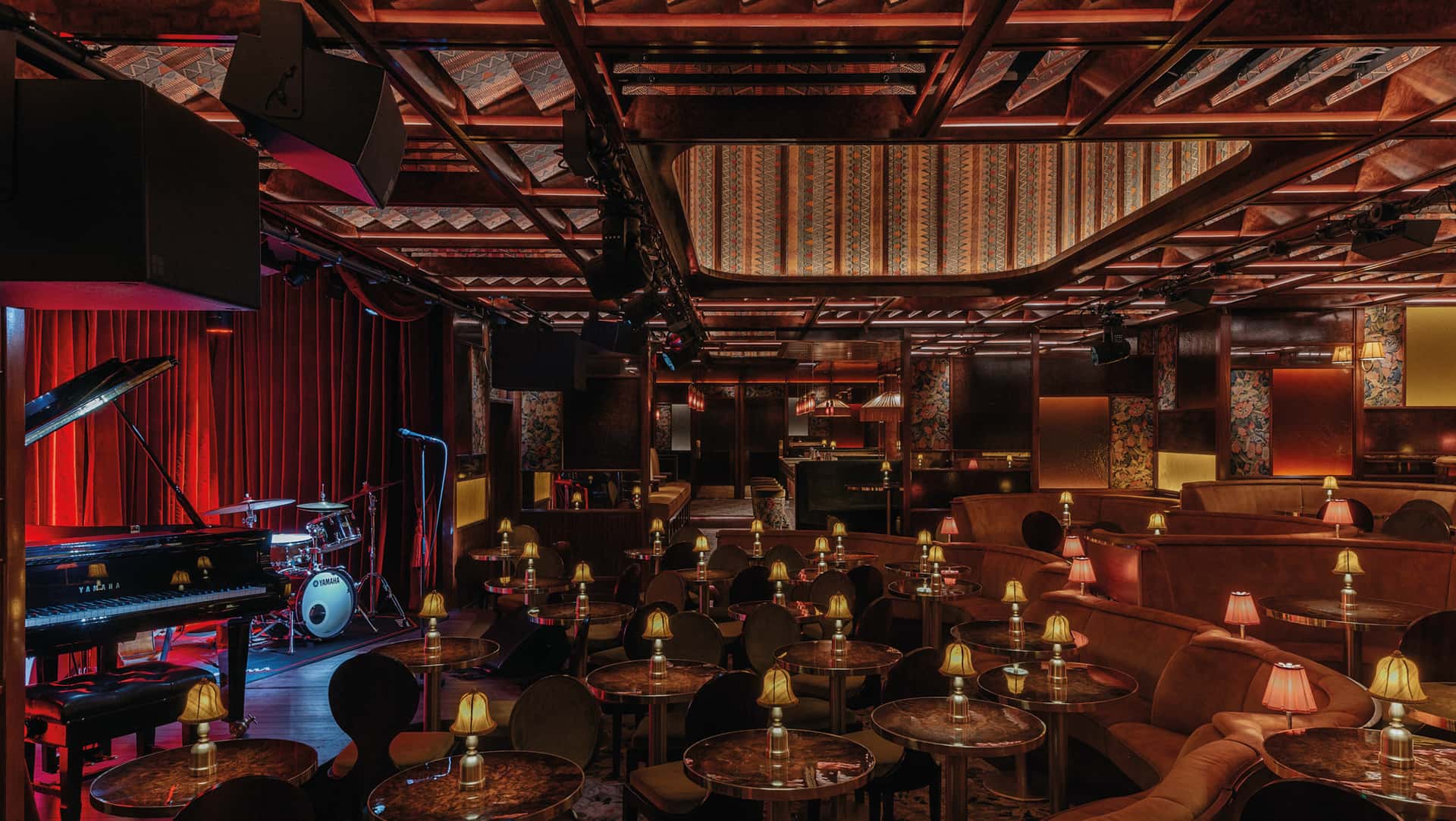
When your venue has welcomed everyone from Miles Davis to Amy Winehouse, standing still isn’t an option. The most recent Ronnie Scott’s redevelopment proves even an icon can evolve
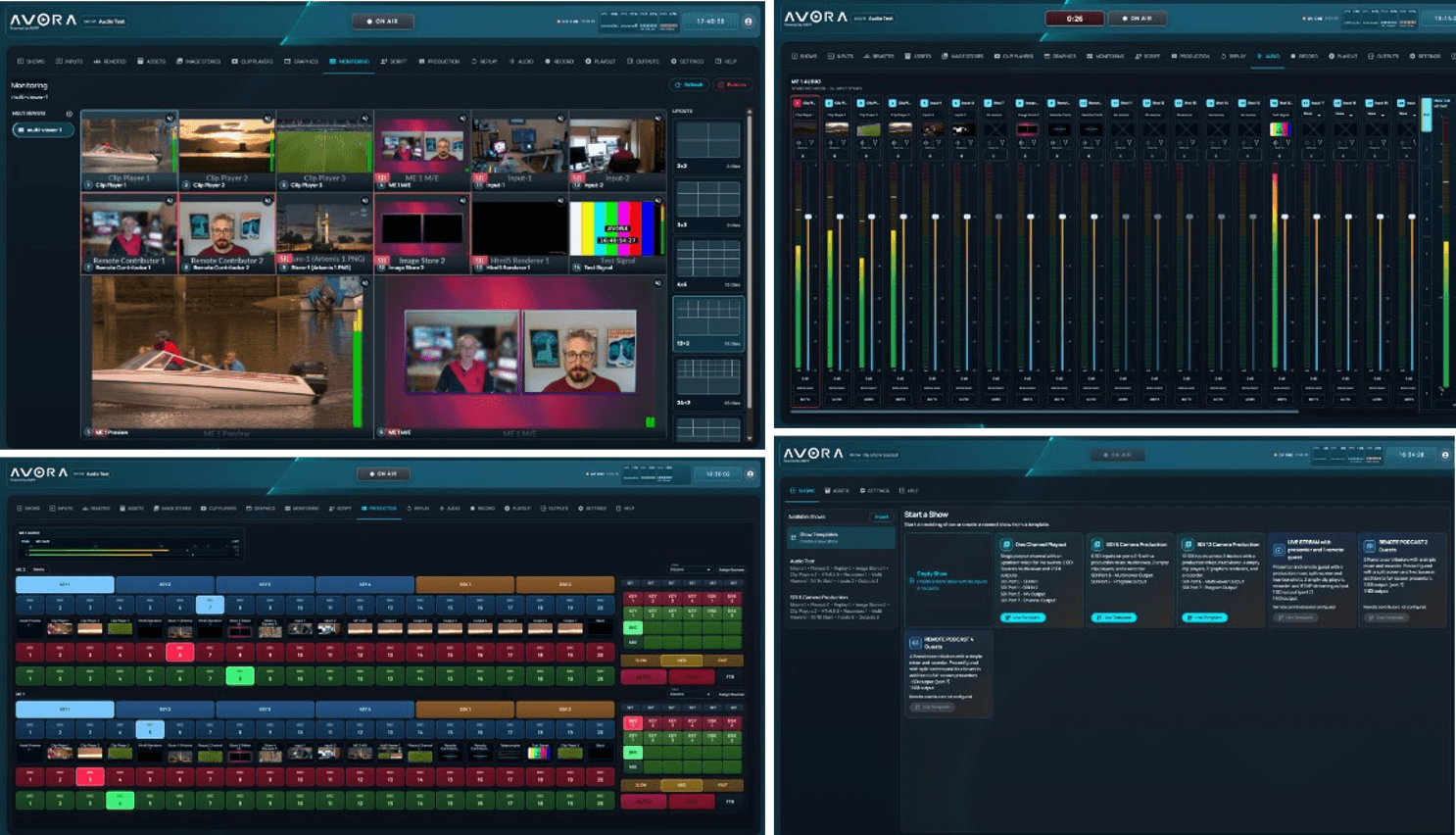
Launched at IBC2026, AVORA gives production teams a complete environment to prepare, produce and deliver live content, from switching and graphics to audio, remote guests, content, replay and delivery.

Tim Burton’s cult classic Beetlejuice has found new life on stage. But recreating its surreal world takes much more than clever costumes and scary set designs

Recently acquired by Panasonic, Hive is entering a versatile new era. CTO Dave Green sits down with LIVE to discuss what this move means for the wider pro AV industry