
dBS Solutions enhances Daresbury Festival
dBS Solutions provided sound reinforcement for the dance-focused Daresbury Festival at Walton Hall and Gardens in Warrington, Cheshire, with all three stages powered by Martin Audio systems.


King Tut has been brought back to life through a dazzling immersive show that blends VR and holograms with real Egyptian artefacts
Words Oliver Webb | Images Antonio Pagano
Immersive entertainment might have been around for a while, but its popularity has risen significantly over the course of the last few years. This popularity soon led to an influx of the works of famous artists being reimagined – notably the Van Gogh immersive show, which allowed visitors to step inside his beloved paintings. Abba Voyage also set a new immersive bar back in 2022, featuring incredibly realistic digital avatars of the band – with its continued success in the present day marking a new chapter in the performance of music. Among the growing array of immersive trends, there has also been a focus on history, with the immersive model bringing the past to life in ways never before seen. The latest of these is Tutankhamun: The Immersive Exhibition, a glittering experience that opened in London earlier in the year.
The discovery of King Tut’s tomb was one of archaeology’s most significant finds to date, with it being found almost entirely intact, unlike many other Egyptian royal tombs that had already been looted. From gold-covered chariots to the legendary gold and lapis lazuli mask, the tomb was an ancient treasure trove, left untouched for thousands of years.


The installation integrates 44 Epson projectors, which are driven by Hive’s Beeblade Pluto servers
Tutankhamun’s tomb and its contents also allowed Egyptologists to learn more about that time period, with its discovery studied and taught from primary school all the way to degree level throughout the decades since.
In the present day, with the increased availability of immersive and audio-visual technologies, people can learn about King Tut’s life and world by entering his tomb themselves.
Created by Madrid Artes Digitales (Mad), the Tutankhamun immersive exhibition saw 300,000 visitors upon its initial opening in Madrid in 2023. The show has now arrived in the UK, with its first stop being London in March 2025 at Immerse LDN, Excel. The show is a spectacular reimagining of ancient Egypt and King Tut’s life. It features video mapping, a 360° VR journey, an interactive metaverse, authentic artefacts from Cairo and a world-first hologram unveiling the secrets of Tutankhamun’s mummification.
The 26,000 sq ft experience combines archaeology, storytelling and immersive technology. The show was produced by FKP Scorpio Entertainment, and the experience was brought to life by Painting with Light (PWL), Hive and other partners.
The exhibition consists of numerous rooms. The Anubis Room is an infinity room with a walking Anubis leading into the world of Tutankhamun. Meanwhile, the Introduction Room features six display cases crammed full of historical information about Egyptology and Tutankhamun. Two treasure rooms full of Egyptian artefacts from as far back as 4000 BC, including a replica sarcophagus and an original funerary shabti from the 20th Dynasty that belonged to Howard Carter’s private collection, are also part of the show.

Content is split into zones focused on Egypt’s temples, daily life and spiritual beliefs
The experience includes an immersive room, which consists of an 8m-high video mapping room with 360° projections, spanning over 1200 sq m, showing stunning wall and floor visuals of ancient Egyptian civilisation, as well as the story of Tutankhamun in a 35-minute programme.
There is also a VR Room, featuring a 360° swivel chair VR headset journey through the tombs and the mystical Egyptian afterlife. Finally, the Metaverse Room, which includes a headset for experiencing an augmented reality walkthrough of the Valley of the Kings, exploring Howard Carter’s base camp and reliving the moment of the 1922 discovery in its full glory.
Headquartered in Madrid, Jelle de Jong co-founded Mad in 2021 and currently serves as CEO. A self-proclaimed fan of immersive shows, de Jong noticed the rise of shows across the globe, especially those exploring the works of painters such as Van Gogh, Dali and Klimt. Despite admiring these shows, de Jong felt there was something lacking, which is where Mad came in.
“I always felt a bit underinformed and that there are parts missing,” he begins. “I thought: these projections are beautiful and can touch your heart, but there should be a concept with more elements. So, from there, we said: let’s dive in and see how we can create something different and unique from the other experiences. We set up a creative team and began writing scripts. Our main focus was on big historical topics and events in global history. So far, we have done shows on Tutankhamun, Pompeii, the Titanic and Cleopatra, so it’s all those kinds of IPs.”


Remote access meant even a power outage couldn’t stop the show
For the Tutankhamun project, Mad not only wanted to highlight several aspects of Tutankhamun’s life, but also to tell a story about the afterlife. “In addition to focusing on King Tut himself, we wanted to put our focus on Howard Carter, who discovered the tomb. It was important to also include a general background of Egyptian civilisation and the beauty of their temples and colours,” adds de Jong. “We then made a breakdown of which parts of the story our historians and Egyptologists wanted to tell and discussed how that could be structured using modern technology. We ended up building these elements of old-school textual information panels, museum rooms with artefacts, originals and replicas and scenic designs on display. We’d then go to all the digital parts. Next was writing the scripts for the several rooms; from there, it was storyboarding.” The Mad team’s next priority was the animatics in black & white – box-grey shading animations which the team then started to fill in. Layered onto this was a complete, tailored and composed soundtrack and special effects and sound effects – along with a narrator and voiceover.
“I always call it like a big movie production or a theatrical projection because my background is in theatre,” de Jong continues. “We like to record all the music in-house with an orchestra to add to the quality and production value.”
Another important element of the exhibition is the sensory features and smells used within some of the rooms. Howard Carter’s own voice also narrates the moment of the tomb being unveiled, which adds to the authenticity of the experience. De Jong felt that these components would not only improve the show, but also help to elevate the event. The experience features its own soundtrack, composed by musician and composer René Merkelbach.
The show took a staggering two years to complete, and at the heart of it was a towering 8m, 360° projection-mapped environment. Known as the black box, the central immersive space was designed and installed by multimedia specialist PWL. With a tight schedule to complete the project, PWL had just under four months to design, build, install and commission the black box for the show’s opening night – a full-scale immersive theatre powered by 44 Epson projectors and featuring spatial audio, projection mapping and synchronisation.

Hive provided 44 Beeblade Pluto media servers that powered the exhibition’s visual content
Hive’s technology was also integral to the visual experience of the exhibition. A total of 44 WUXGA projectors delivered nearly 8K resolution. Hive’s Beeblade Pluto media servers, housed in three compact Beehive enclosures, served as the backbone of the experience. The projection canvas covered more than 1200 sq m, with content playing across massive ultra-wide resolutions and at 30fps. The venue presented a number of its own challenges, which included uneven flooring, changing ceiling heights and limited build time. With multiple international partners involved, it was critical to deliver a fully integrated solution that would set a standard for future touring venues. Remarkably, Vioso calibrated all 44 projectors on site in only two days using its advanced camera-based solution, newly integrated with Hive’s playback system.
During one of the shows, a power outage nearly disrupted the event, however PWL’s technical team quickly diagnosed the issue remotely and guided on-site staff to a resolution within hours – allowing the exhibition to resume with minimal disruption. PWL elevated the experience with projection mapping and meticulously aligning video content across vast projection surfaces. The 3D audio system featured dynamic soundscapes, which audiences could enjoy.
Alex Couzins of Hive marketing acknowledges the important partnership with PWL and is excited for future collaborations. “They’ve been very trusting and forthcoming with Hive in terms of the trust that they’ve placed in us to get this show off the ground in such a short amount of time,” he says. “Obviously, there were snags along the way, but they’ve all been resolved. Hive can be remotely controlled and managed through the Hive cloud, so that allows the teams to always see the progress or status of the show and how it’s running. This also enabled us to save time and money. You also don’t require a technician to be on site for that, so that’s been pretty good. Now we have this proven concept with PWL’s black box set-up, we’re in discussions to roll this out in other locations across Europe and potentially further afield as well. It was an amazing example of how different AV technologies were effectively being put together to create this overall experience and make it an enjoyable and fun day out for audiences.”
The London installation is the latest stop in the exhibition’s global tour, which has already drawn more than 1.8 million visitors across 12 cities – including Madrid and Cairo. With immersive installation shows on the rise, this exhibition is redefining how the tech can be used to portray significant historical events.


Visitors can view artefacts dating all the way back to 4000 BC
“I’m very happy with how everything turned out, especially the add-on of the mummification process – the hologram that we made this year just for the UK,” says de Jong. “We call it the extra-large version. In London, in just three months, we are already on 160,000 tickets plus.
The demand for it is extraordinary. I’m absolutely overjoyed with all the positive comments and the reviews that people have left us, especially for the UK audience, as they are used to all the shows over the last few years from companies such as Lightroom and Frameless. I’m proud of our first run in the UK.”
In addition to Tutankhamun: The Immersive Exhibition, The Last Days of Pompeii and The Legend of the Titanic, Mad has announced the world premiere of its show Cleopatra, which is launching in September of this year.
Tutankhamun: The Immersive Exhibition in London ran until 29 June 2025 and will next run in Glasgow from 24 July to 26 October
This feature was first published in the Jul/Aug 2025 issue of LIVE.
dBS Solutions provided sound reinforcement for the dance-focused Daresbury Festival at Walton Hall and Gardens in Warrington, Cheshire, with all three stages powered by Martin Audio systems.
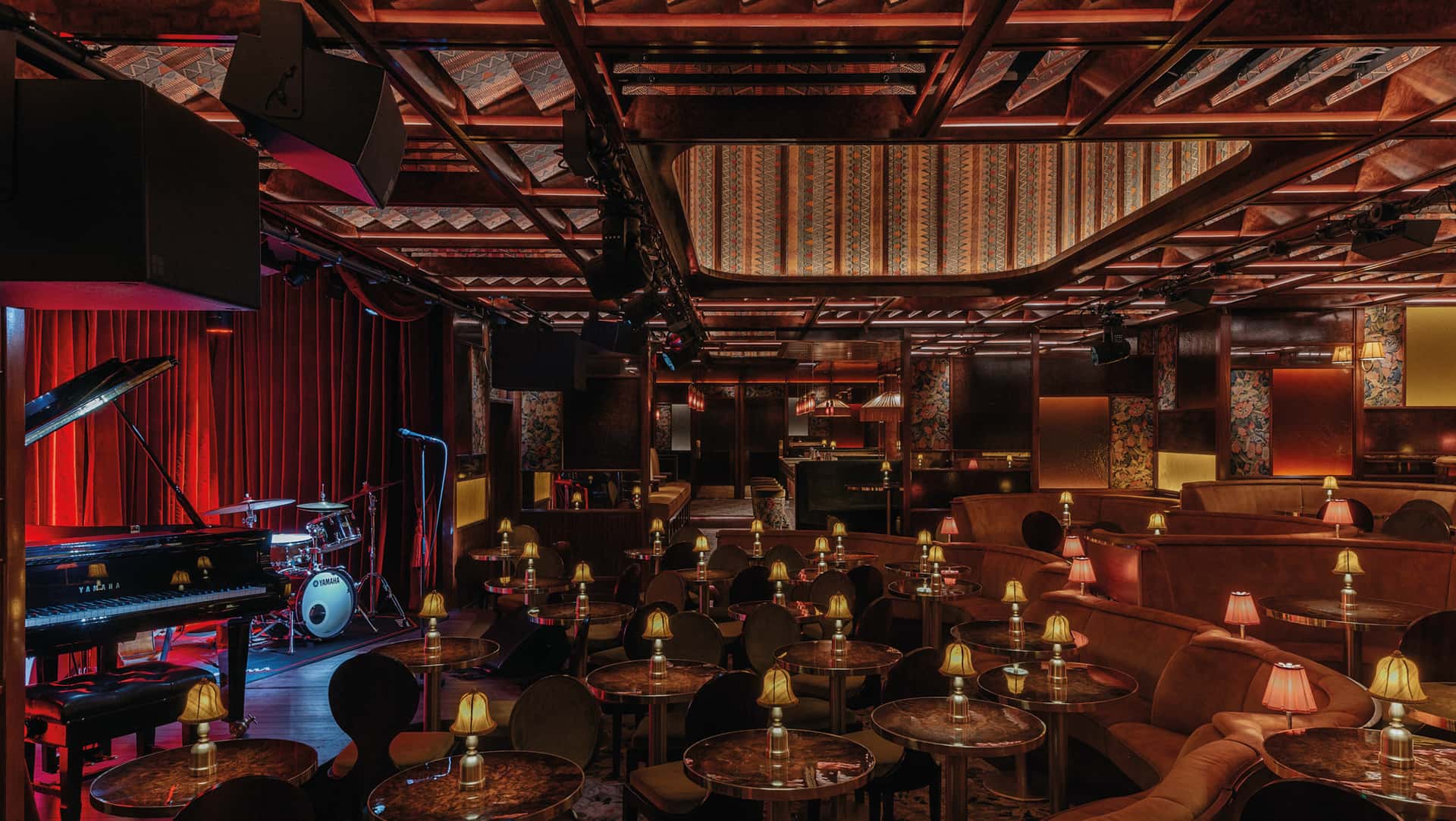
When your venue has welcomed everyone from Miles Davis to Amy Winehouse, standing still isn’t an option. The most recent Ronnie Scott’s redevelopment proves even an icon can evolve
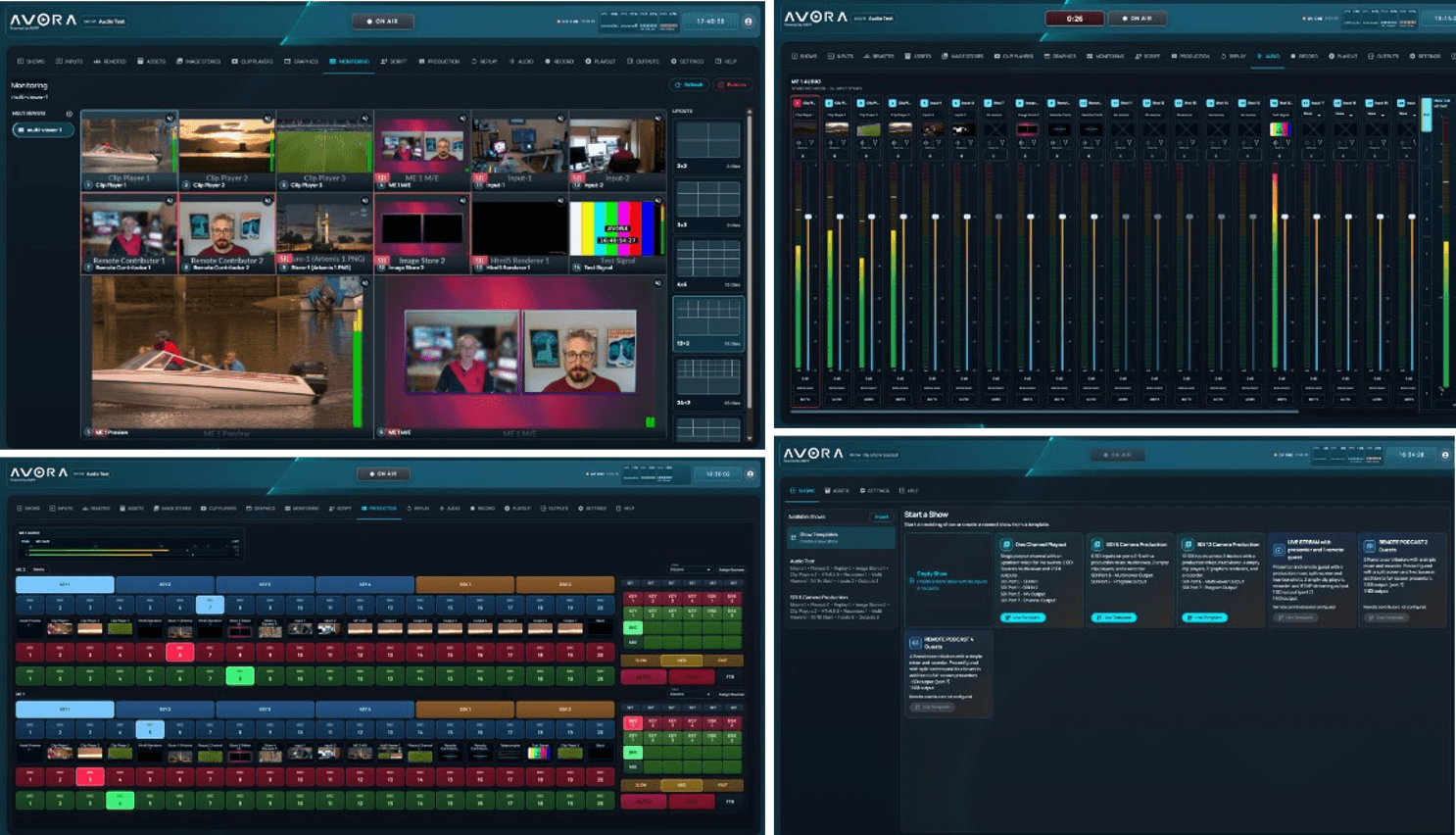
Launched at IBC2026, AVORA gives production teams a complete environment to prepare, produce and deliver live content, from switching and graphics to audio, remote guests, content, replay and delivery.

Tim Burton’s cult classic Beetlejuice has found new life on stage. But recreating its surreal world takes much more than clever costumes and scary set designs

Recently acquired by Panasonic, Hive is entering a versatile new era. CTO Dave Green sits down with LIVE to discuss what this move means for the wider pro AV industry