


DiGiCo releases Quantum638 Mixing Console
The brand’s newest desk combines the best elements of SD7 and SD5 with the latest Quantum tech, while an optional “T” version is perfectly tailored for the most demanding theatrical productions.


Gareth Owen is the sound designer behind some of the biggest Broadway and West End tickets. He reflects on his expansive career, including Tony-award-winning work on MJ The Musical
Words Katie Kasperson
Spring Awakening. & Juliet. Come From Away. Back to the Future. In the Heights. These are some of the many stage productions that Gareth Owen has had a hand in. His career began in local nightclubs, where he was responsible for the lighting. But, as often happens in live entertainment, Owen was asked to switch gears and instead handle sound for local bands.
“Nobody in the club knew anything about sound – and neither did I,” he admits. “I got away with learning on the job without too much criticism from the audience. You certainly wouldn’t get away with doing that today.”
Owen then joined SSE Hire and toured the world with rock bands, working on stadium series before sidestepping into theatre. “I became the go-to person for rock musicals – the sort people want to sound like concerts.”
Enter shows like MJ The Musical.
“I remember getting the call about doing MJ The Musical,” Owen recalls. “The first cassette tape I ever bought was Michael Jackson’s Thriller, so I’ve been a massive fan my whole life. When the producer, Lia Vollack, called, I literally had to mute my phone, scream, and unmute it. It was quite a moment.”
Owen’s familiarity with Michael Jackson’s discography proved to be useful. They wanted to design ‘the best sound on Broadway’ – that is, before the pandemic forced venues to close their doors. “The brief changed to: ‘We’ve got to get the show open and try not to spend too much money, because who knows how long it’s going to take for theatre to bounce back?’”
Despite the tighter budget, “we didn’t compromise the end result,” says Owen. He used an Avid VENUE mixing desk (according to Avid, the S6L is Owen’s console of choice for the vast majority of his shows), and a d&b Soundscape PA system. “We linked it to a tracking system – the zactrack actor-locating system – so every performer wears a tracker, and the Soundscape system moves sound around the stage. Wherever you are in the auditorium, the sound always comes from the person who’s singing or speaking.” He also added Sennheiser Digital 6000 series radio mics and an Allen & Heath ME-1 orchestral mixing system to MJ’s arsenal. “It’s rock concert-level sound in a Broadway theatre.”
Musicals like MJ are choreographed to a tee; Owen worked with the lighting and video departments so everything was in sync. “We’ve got click tracks running through the show, and we’re sending a timecode to everyone. We’re using software called rTracks, which my team wrote – we’re in the process of finally releasing it to the public,” he reveals.
When Owen designs a show’s sound, it’s not just for one show; it’s every version, no matter the venue, the cast, the city. Whether it’s a limited run or travelling circus, “everything that you hear is my responsibility,” he says.
“Obviously, there’s only one of me,” he continues, “and I can’t be in 50 places at once. One of the big differences between rock ’n’ roll and theatre is that the person who’s making decisions about how the show will sound is not actually the person mixing. In theatre, the sound designer decides how the snare drum is going to sound, how the vocals are going to sound, what reverbs we’re going to use – and then we have a team of people whose job it is to mix that every night and mix it the same way.
“As a sound operator in theatre, it is necessary to mix what the designer has created, even if it’s not necessarily to your taste,” continues Owen. “That’s quite a difficult thing – certainly for people who grew up in rock ’n’ roll – to suddenly be in that position.” While he might travel on occasion, Owen has a team of associate sound designers who regularly check on the Broadway, West End and touring shows, ‘just to keep everything in line’.
But how do designers account for the individual venues, and the differences between them? “When it comes to building a touring sound system, you have to create the best possible compromise,” says Owen.
“You’ve got X amount of truck space, X amount of budget and X amount of time – and time is a big limiting factor. On Broadway, you might be afforded four weeks to load a system and then another four weeks of technical rehearsals to get it right. On a touring show, you load in at 7am, and the curtain goes up at 7pm. They’ve only got 12 hours, and they do it week in, week out. I’m completely in awe of that,” Owen admits.
“What I design is often based on what can be achieved in that 12-hour window. There’s no point in putting a load of fancy stuff on the list if the crew doesn’t have time to take it off the truck. We design the best possible system we can that’s flexible enough to deal with different venues.”
MJ The Musical’s sound design would be incomplete without the zactrack SMART system. “It uses real-time radio-tracking technology to generate positioning data,” says Ryan Hindinger, market manager, lighting, at its distributor ACT Entertainment. Through pinpointing performers and other onstage elements, zactrack ‘ensures the audio is localised’, adding to the show’s immersive sound design – all while being invisible to the audience.
The zactrack system is a versatile, venue-agnostic tool that Owen has also used on productions like Back to the Future and Cinderella. “The system offers tracking data via the PosiStageNet protocol, an industry-standard format widely used across live entertainment technologies,” says Hindinger. “The PSN data can be distributed through the show network, enabling seamless integration with sound, lighting, video and automation systems. Multiple departments can then use the same positioning data to create synchronised, highly responsive production environments.”
These days, people approach Owen with job offers, not the other way around. “I’m now considered a pioneer in immersive audio,” he says, but he isn’t trying to brag. “The irony is it’s not a new thing, and I’m not the only person who’s been doing it. What I’ve potentially pushed is the idea of mixing a whole show in surround sound. I’m trying to follow the lead of cinematic mixers who do movie scores – they put stuff wherever it feels right.
“When I first started, sound was something to be apologised for,” he continues. “Everyone pretended that there wasn’t sound – microphones and speakers had to be hidden, and the sound was minimal. But that isn’t actually what the majority of audience members want today.”
Owen compares live theatre, as it’s done today, to being in the crowd at a concert or being in a cinema. “You go to a movie theatre and a spaceship flies over and your chest shakes,” he says. “There’s a sweeping orchestral sound around you. Yes, there are plenty of purists, but there are a lot more people who simply want theatre to sound great; they don’t care where the sound’s coming from.
“Take the average person going to see MJ The Musical or Back to the Future,” he continues. “They want Thriller to hit them in the chest. They want Alan Silvestri’s theme to wrap around them and take them back to their childhood, when they first saw Michael J Fox on a skateboard. Truth is, most people don’t care about the invisibility of sound any more, and that’s what I’ve made a career out of: cinematic sound design.”
Learn more about Owen’s work at garethowensound.com, and catch MJ The Musical on Broadway and elsewhere around the world.
This article was first published in the Autumn 2026 issue of LIVE.
The brand’s newest desk combines the best elements of SD7 and SD5 with the latest Quantum tech, while an optional “T” version is perfectly tailored for the most demanding theatrical productions.

In an ever immersive-hungry landscape, AV experts unpack how to deliver jaw-dropping experiences when financial, time and spatial limits get in the way

A love letter to Puerto Rico wrapped in a stadium-sized extravaganza, here’s how the creative team crafted the lighting for Bad Bunny’s biggest tour to date
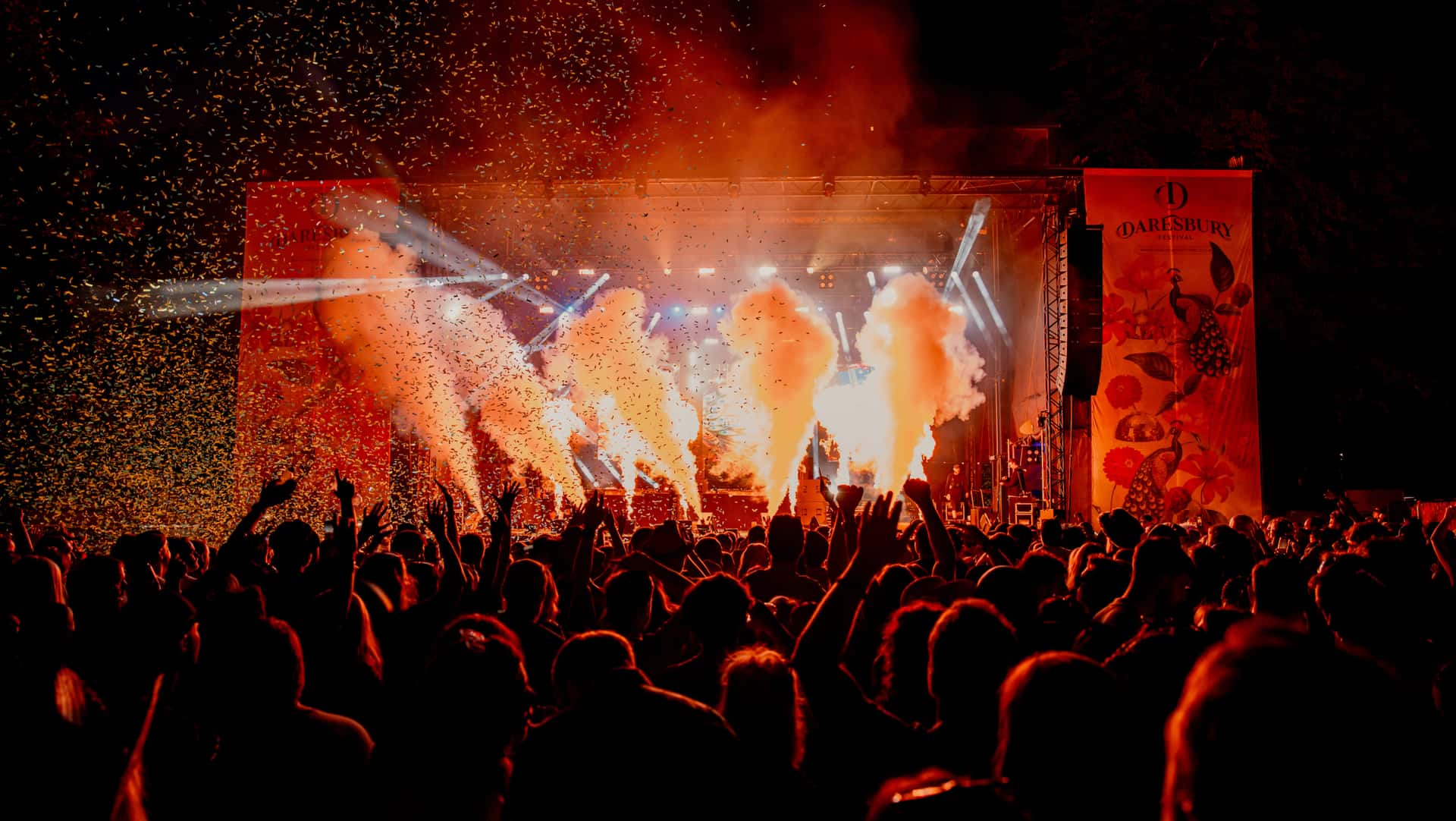
dBS Solutions provided sound reinforcement for the dance-focused Daresbury Festival at Walton Hall and Gardens in Warrington, Cheshire, with all three stages powered by Martin Audio systems.
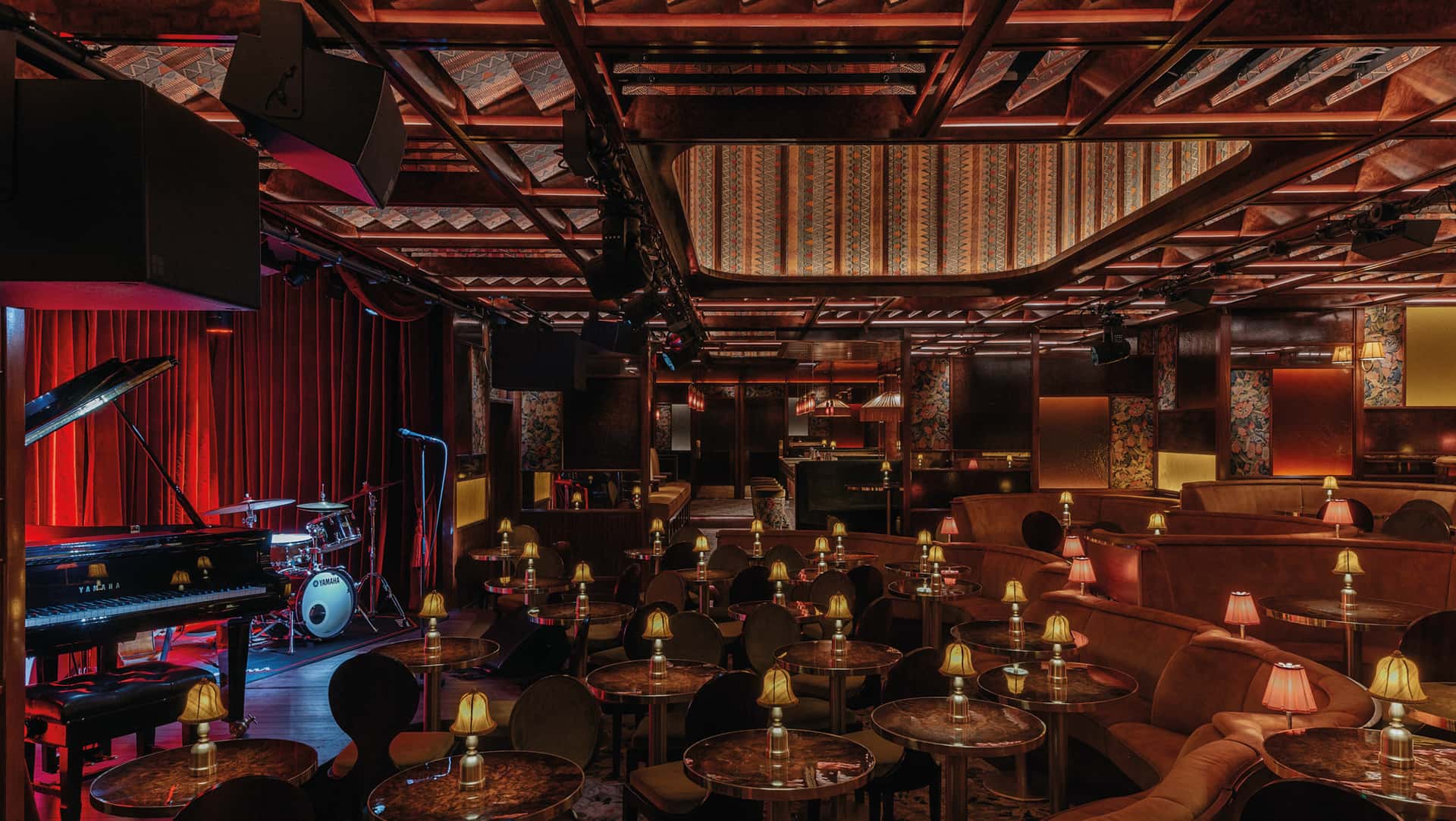
When your venue has welcomed everyone from Miles Davis to Amy Winehouse, standing still isn’t an option. The most recent Ronnie Scott’s redevelopment proves even an icon can evolve