


Gareth Owen: career profile
Gareth Owen is the sound designer behind some of the biggest Broadway and West End tickets. He reflects on his expansive career, including Tony-award-winning work on MJ The Musical


History has never been more alive – as demonstrated by the National WWI Museum and Memorial’s latest exhibition
Words Oliver Webb
It has been more than 100 years since the Great War came to an end after Germany signed an armistice in a railway carriage in the Forest of Compiègne.
World War I was a significant tragedy, and ultimately changed the course of history. It single-handedly led to the disintegration of four empires – the Austro-Hungarian, German, Ottoman and Russian – and the aftermath and sanctions on Germany that followed were a significant factor in the outbreak of World War II. An estimated 20 million people lost their lives and around six to 13 million of those were civilians. Remembering the legacy of those that were affected by the war is not just important, it’s imperative.
The National WWI Museum and Memorial (which celebrates its 100th anniversary this year) located in Kansas City, Missouri is home to the most comprehensive collection of WWI objects in the world (with more than 350,000 items) and is the only museum in the US that shares the stories of WWI through the eyes of those who lived it.
The museum’s latest exhibition is Encounters, described as a face-to-face journey into the stories of the Great War. Encounters uses immersive technology to share the stories of 16 individuals from their own personal historical accounts. The accounts are by those from different walks of life who were all impacted by the war – combat soldiers, women munitions workers, colonial soldiers, a child, a dissenter and more. Using source material of diaries, letters and photos, the actors that visitors see on screen are as authentic as historically possible.
Throughout the exhibit, visitors are able to step into one of several alcoves, where a life-sized digital performer recounts the experiences of a real individual whose story has been reconstructed from diaries, letters and photographs. For museums, the challenge lies in making these personal experiences resonate with younger generations.
The National WWI Museum and Memorial chose Electrosonic as its audio-visual partner when reopening the museum back in 2026. Electrosonic was a partner on the original museum opening in 2006, so it was fitting for this project given their 20-year history. The main gallery underwent a major refresh for the project and also holds the permanent exhibition, The World War, 1914-1919.
“The museum is America’s leading institution dedicated to remembering, interpreting and understanding the Great War and its enduring impact on the global community ever since,” says Alex Westerh, vice president, global marketing at Electrosonic. “Working in partnership with a team of partners, we worked with the museum’s team to reimagine how we tell underrepresented stories of people of all walks of life who were impacted by WWI.”
Chris Wyche, VP for facilities, public safety and technology at the museum, argues that – with advancements in recent technology – there are more opportunities to reach more people. “Different people learn in different ways and the immersiveness now makes that more accessible to more people. We have always been a world-class museum, but it’s much better now.”
Striking the right balance between technological innovation and storytelling nous is paramount for any immersive experience, and this approach allowed the museum to transform history from facts into personal accounts. Christopher Warren is chief curator at the museum, and argues that we all have our own expectations when walking into museums today.
“We all carry small computers in our pockets, so when we walk into a museum the technology needs to be updated to enable us to tell more diverse stories,” he says. “AV is a great component partnered with artefacts that we have in our collection. It brings stories alive and brings more diverse sets of stories. AV is not a replacement, it’s a partner. And being able to use that to tell stories, to delve into that history and bring it alive for the public, is a great opportunity. It’s something we have to do for the National WWI Museum.”
To bring this vision to life, Electrosonic worked alongside an industry-leading project team to design, engineer and integrate the audio-visual and acoustic technologies required. Electrosonic partnered with PIXERA (AV Stumpfl), ISAAC (Smart Monkeys Inc), Dot Crew, JE Dunn and Technical Artistry to help realise the project.
Designed by Ralph Appelbaum Associates, the exhibit also features HOLOPLOT spatial audio, the audio behind Sphere in Las Vegas, as well as 1.25mm LED technology from Nanolumens paired with Christie projectors. HOLOPLOT, specifically, allows sound designers to place virtual acoustic sources anywhere in a room. This technology allows all alcoves to be running at the same time without disrupting the visitor experience. “The audio system allows you to steer audio in a very directional way, and when you are outside of that bubble you can barely hear the audio program. When you step into the bubble, this full-fidelity soundtrack is present to you,” says Chris Conte, executive consultant and global ambassador at Electrosonic.
When it comes to Electrosonic’s approach to any experience, Conte emphasises the importance of quality. “We don’t just ask how big a screen size or what kind of audio system you want, those are the wrong questions to ask,” he adds. “The right question is instead: ‘What do you want the guests to feel when they walk into a space?’ That then helps us define technology that delivers on a creative level rather than just displaying what the message is.”
The new technology reflects the museum and memorial’s mission of remembering, interpreting and understanding the Great War and its enduring impact on the global community. A striking example is the new interactive touch tables, which invite visitors to take on the perspective of a soldier navigating communication across a battlefield or a shipment to allies across the sea.
Matthew Naylor, the museum’s CEO, believes these make for an impactful guest experience. “We don’t push people in a particular route in gallery, nor do we push them into learning or exploring in a certain way. That’s the real power of technology and how it’s used here at the National WWI Museum and Memorial.”
Naylor also argues that one of the powerful things about the museum, and especially the main gallery, is how technology folds into the background while supporting the storytelling.
Encounters proved to be an ambitious undertaking from all involved. Using historic primary source materials such as journals and diaries, and secondary sources such as newspapers, to create characters based on real-life people who were impacted by the Great War was a highly effective way of bringing these stories to life.
The project also represents people from diverse backgrounds and offers a wide range of different perspectives. All the enhancements were created for a more immersive visitor experience. “It’s not just reading history on an object or a wall; it’s hearing and seeing those stories,” explains Warren.
“It just brings a more exciting and a more interesting component to history,” he continues. “People read books all the time about history, but they come into the museum because they want to see what it was like for those who lived in this time period. By using audio-visual sound and lighting, we can emphasise that kind of storytelling and help visitors make a personal connection.”
The ultimate goal of the Encounters exhibition is to educate, inspire reflection and honour the courage, patriotism and sacrifice of all who served in WWI. “The exhibit really humanises the experience by introducing characters to tell their own story,” adds Conte. “This gives a human-to-human connection to the viewers, which is important to children, teenagers and adults alike.”
The Great War was not a war that was only fought on the battlefield and in the trenches, it was also fought at home. A munitions factory worker, a dissenter, the colonial soldier, the conscientious objector. These are real people from recognisable places who were caught up in WWI, but are often forgotten to the wider populace.
Electrosonic wanted to ensure historical accuracy while telling these underrepresented stories. “A project like Encounters isn’t ever easy,” concludes Westerh, “but by working with so many talented specialists, I think we helped create something really special.”
This article was first published in the Autumn 2026 issue of LIVE.
Gareth Owen is the sound designer behind some of the biggest Broadway and West End tickets. He reflects on his expansive career, including Tony-award-winning work on MJ The Musical

The brand’s newest desk combines the best elements of SD7 and SD5 with the latest Quantum tech, while an optional “T” version is perfectly tailored for the most demanding theatrical productions.

In an ever immersive-hungry landscape, AV experts unpack how to deliver jaw-dropping experiences when financial, time and spatial limits get in the way

A love letter to Puerto Rico wrapped in a stadium-sized extravaganza, here’s how the creative team crafted the lighting for Bad Bunny’s biggest tour to date
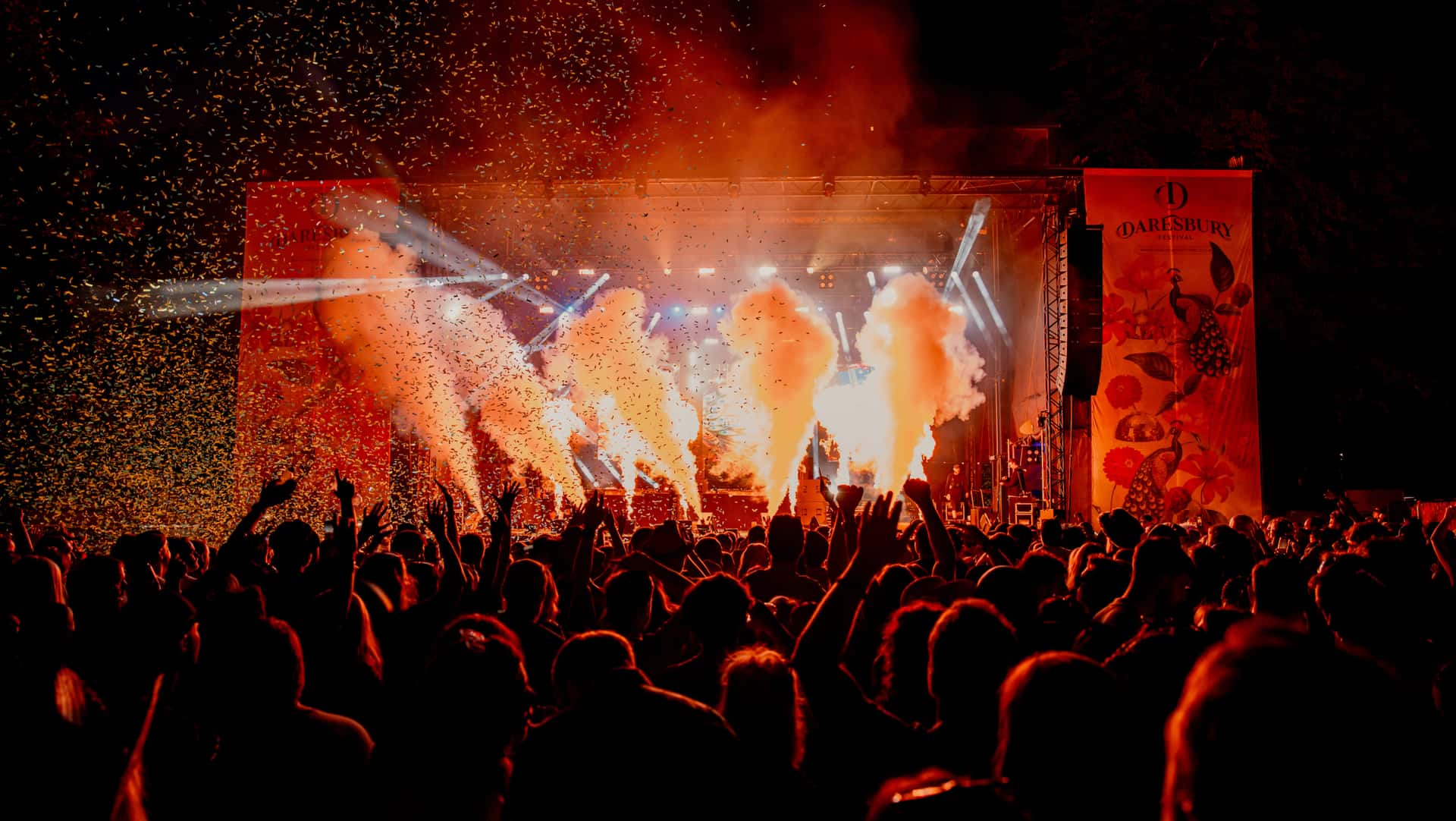
dBS Solutions provided sound reinforcement for the dance-focused Daresbury Festival at Walton Hall and Gardens in Warrington, Cheshire, with all three stages powered by Martin Audio systems.