

Grass Valley launches AVORA at IBC2026
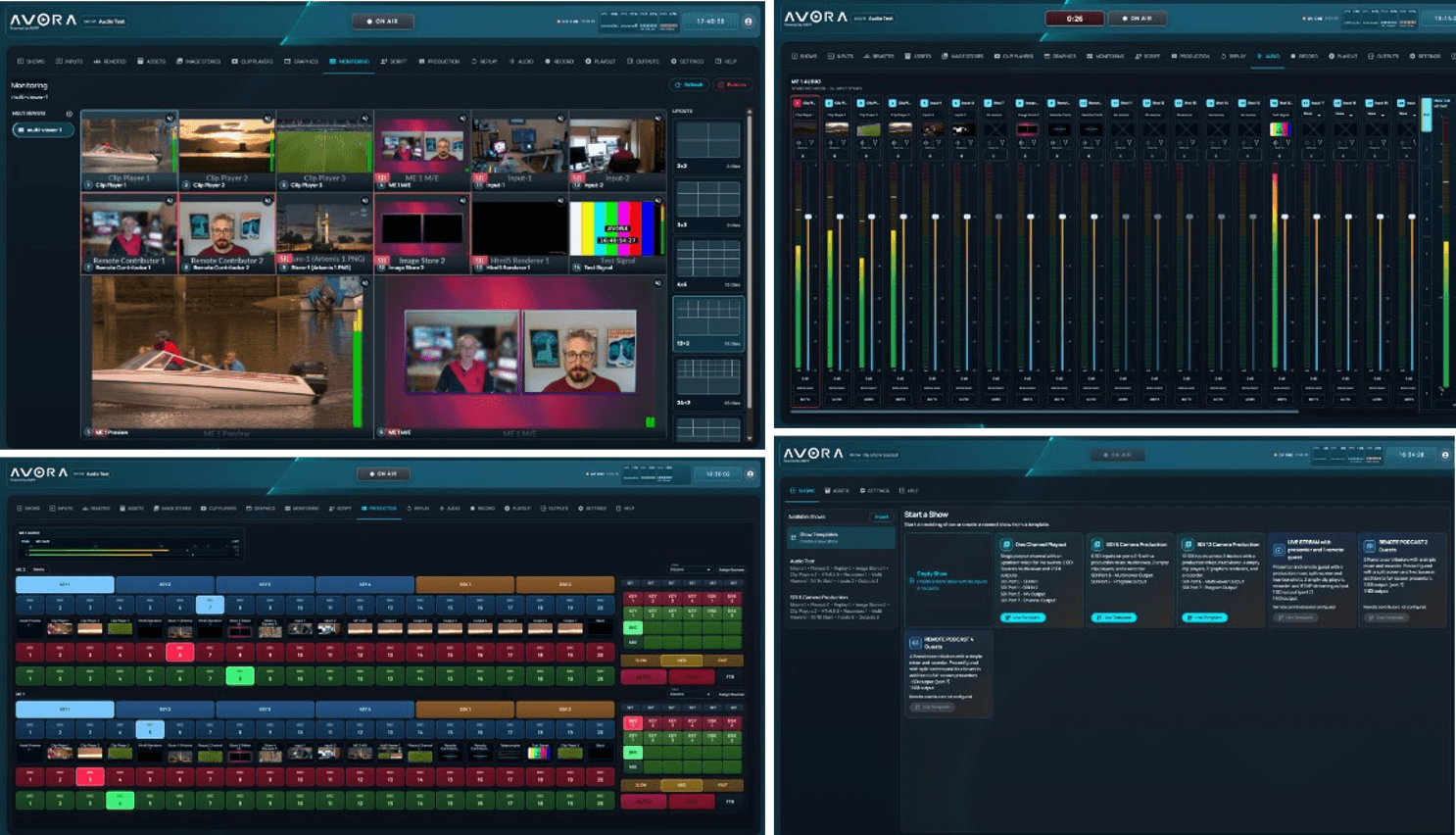
Launched at IBC2026, AVORA gives production teams a complete environment to prepare, produce and deliver live content, from switching and graphics to audio, remote guests, content, replay and delivery.

When your venue has welcomed everyone from Miles Davis to Amy Winehouse, standing still isn’t an option. The most recent Ronnie Scott’s redevelopment proves even an icon can evolve
Words Verity Butler
For almost seven decades, Ronnie Scott’s has occupied a unique place in the world of live music. Since saxophonist Ronnie Scott opened the doors in London’s Soho in 1959, the club has welcomed a huge roll call of artists, including the likes of Miles Davis, Ella Fitzgerald, Nina Simone and Amy Winehouse – as well as countless contemporary stars.
Now firmly established as the London jazz club, it has become an institution where audiences expect world-class performances delivered with an intimacy that’s becoming increasingly difficult to find. This has been a particular challenge in a live music landscape that finds itself dominated by sold-out stadium shows and arena tours.
But, when you’ve spent almost 70 years earning a place among the world’s greatest live music venues, how do you expand and evolve without diluting
what made the original so special?
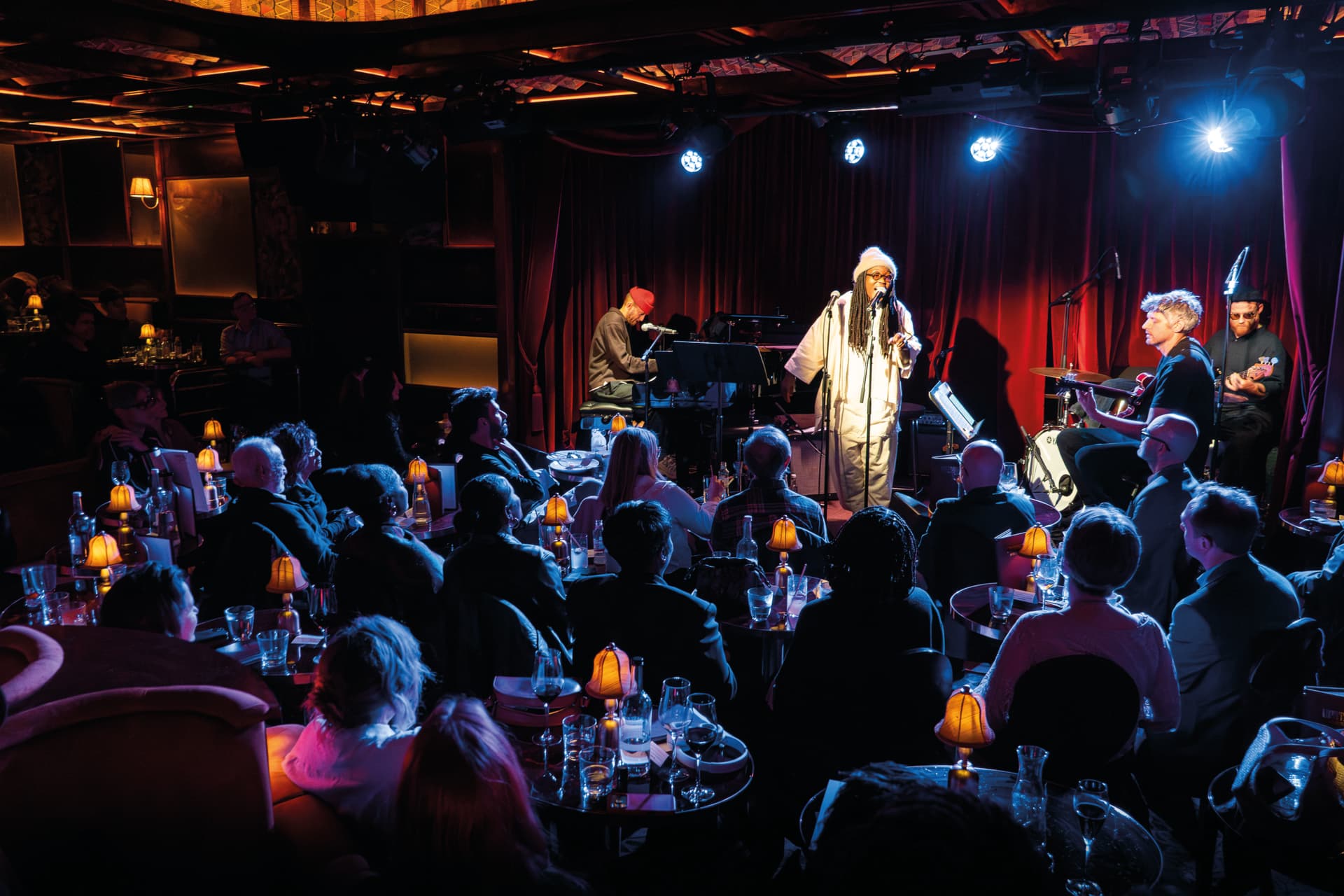
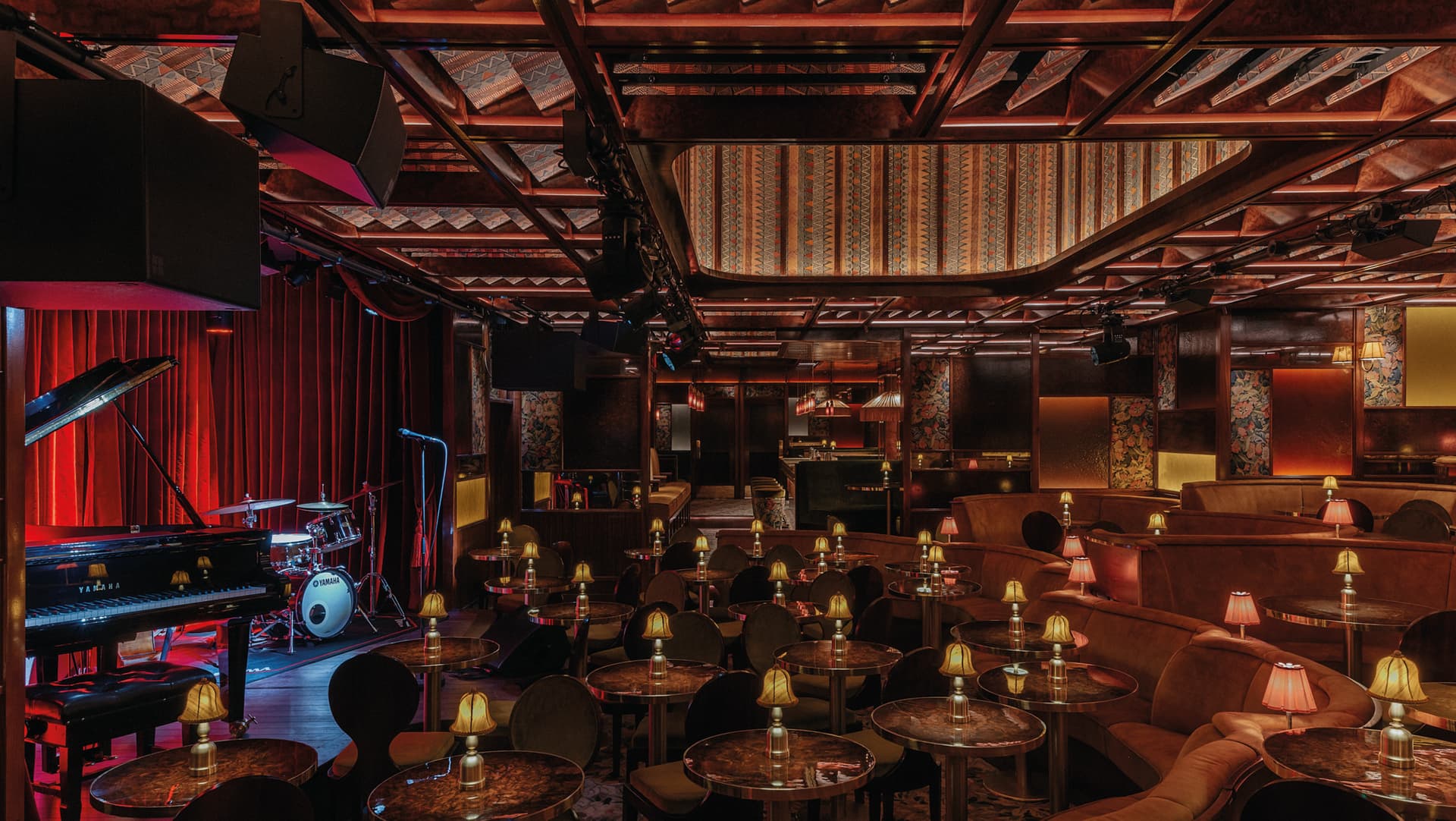
Following a recent and ambitious redevelopment, Upstairs at Ronnie’s has transformed a relaxed first-floor bar into a purpose-built, 140-capacity performance space that reflects everything the club has learned about presenting live music over the past six decades. The project went above and beyond, seeking to create a venue capable of handling anything from intimate classical recitals and near-acoustic solo performances, to energetic soul, funk and Cuban nights. This was all with the aim of sustaining the close connection between artist and audience that defines Ronnie Scott’s.
As Charlie Dale, the technical manager at Ronnie Scott’s, explains to LIVE: “With Upstairs at Ronnie’s, we set ourselves the somewhat audacious goal of creating
the greatest small live music venue in the world. We wanted a space where artists and audiences could feel even closer to the music, with every element of the design focused on sound quality, comfort and connection.”
Achieving that ambition demanded attention to both sight and sound, resulting in a carefully considered specification that blends a Yamaha S3X Grand Piano, a d&b audiotechnik sound system, an entirely digital Shure wireless ecosystem and a compact but capable German Light Products (GLP) lighting rig.
From the outset, it was made clear that the redevelopment extended far beyond installing new equipment. The former Upstairs room was comprehensively rebuilt – earning itself a raised ceiling, dedicated stage, full acoustic treatment and new technical infrastructure.
Every decision within the process was driven by the variety of the Ronnie Scott’s programme, where one evening might feature a chamber performance before a vocal jazz jam or an energetic Latin session later in the week.
This goal was certainly achieved, with the venue’s programme since the relaunch reflecting that musical versatility. Mondays now see a classical series presented by violinist Lizzie Ball alongside artistic director and house pianist James Pearson. Wednesdays focus on jazz vocal performances before opening into vocal jam sessions for emerging and established singers alike – while the club’s long-running Friday Cuban nights continue a tradition that stretches back further than a decade.
For the audio team, the goal wasn’t only about delivering high SPL or impressive specifications. Instead, it was about building a system capable of disappearing entirely when required.
“The quality of the audio for both audiences and musicians on stage was of utmost importance to us when designing the venue,” explains Dale. “For many of the shows, our goal is to make the PA as audibly invisible as possible, while also needing the ability to have a more vibey and in-your-face sound for shows that require it.”
To achieve this, Ronnie Scott’s standardised with a fully digital Shure wireless workflow, deploying SLX-D+ digital wireless microphone systems alongside the new Axient Digital PSM wireless personal monitoring system. The mix provides an end-to-end digital signal path from microphone to in-ear monitors while simplifying day-to-day operation inside a venue that rarely gets a day off.
Reliability was just as important as sound quality. Ronnie Scott’s operates a whopping 362 days a year, and it puts on between two and four performances most of those days, leaving little room for technical compromise.
“Working with trusted brands within the industry such as Shure, d&b and Yamaha was essential to achieve these goals,” adds Dale. “All these brands have proven track records of providing high-quality gear that is built for the rigours of everyday use, in a small footprint but powerful enough package for a 140-capacity room with as varied a line-up of acts as we get upstairs.”
The Shure installation also shows how modern networking continues to impact venue workflows.
“Using SLX-D+ and Axient Digital PSM for mics and monitoring allows us to have a high-quality, completely digital signal chain from mic to monitor, while also allowing us to monitor the RF quality and settings of the mics in our console over the Dante network. When you’re in a sound booth with limited space, having a laptop with Wireless Workbench open all the time is an absolute must,” highlights Dale.
The installation also benefits from Shure’s latest Axient Digital PSM firmware, introducing Single Carrier Narrowband operation, which provides a simpler and more familiar RF workflow that’s particularly valuable in a venue where multiple productions are rotating through the room every day without lengthy set-up windows. It’s clear that familiarity is still important, regardless of how sophisticated wireless technology becomes.
While pristine audio plays a leading role at any jazz space, lighting also presented an equally nuanced challenge. Having overseen a major lighting upgrade to the Ronnie Scott’s downstairs venue in 2018, Dale approached the upstairs project with years of operational experience.
The brief was deceptively demanding. Fixtures needed to be exceptionally compact to suit the room’s limited trim height, virtually silent during acoustic performances, capable of beautiful colour rendering at extremely low output levels, but also dynamic enough to support high-energy contemporary shows. Nothing too specific then!
“The combination of small, quiet, great colour at low output and movement capabilities is not an easy thing to find,” notes Dale.
The solution: GLP’s X5 Series, installed by Steve Myers Ltd, which handled the design, infrastructure, wiring and fixture supply during the project.
Eight GLP impression X5 Compact fixtures form the moving-light backbone of the rig. Each unit incorporates seven 40W RGBL LEDs producing up to 3980 lumens across an expansive 3.6° to 66° zoom range, with 540° pan and 236° tilt. GLP’s iQ.Gamut colour calibration system ensures consistent colour reproduction and particularly accurate skin tones – a subtle but significant advantage in a venue where audiences sit just metres from performers.
The pixel-mapping capabilities of the X5 Compact also allow designers to generate movement and visual interest without relying solely on physical fixture motion, helping maintain a refined aesthetic during quieter performances. Perhaps the most interesting aspect of the installation, however, isn’t listed on the standard spec sheet.
In recognition of the venue’s notably low ambient noise levels, GLP developed bespoke fan modifications specifically for Ronnie Scott’s, reducing operating noise below the already-quiet standard specification without in any way compromising output.
Completing the package are six X5 Dot Wash fixtures. Comparable in size to a traditional MR16 Birdie, each delivers up to 550 lumens via a manual 16° to 68° twist zoom, making them particularly well suited to close-range positions where the fixtures themselves need to remain visually discreet.
“Keeping everything in the X5 range meant that colour matching between fixtures is very easy,” explains Dale. “The X5 Atoms and the X5 Dots are compact and silent, which means that they don’t disturb our intimate shows and are visually unobtrusive above the stage. The X5 Compacts, once GLP had made some custom fan modifications for us, gave us the best combination of small fixtures that are quiet. And with the pixel-mapping ability, they allow us to have dynamic lighting and different looks without having to rely solely on movement.”
The first performance in the remodelled venue featured Vula Malinga with special guest Nao, and it demonstrated what the redevelopment set out to achieve. On top of that, the venue has continued to prove itself across a diverse programme of performances since relaunch.
“We have had nothing but compliments from artists about how good Upstairs sounds,” enthuses Dale. “Having pristine audio for our artists is a key priority for us, so every act can be confident that they can produce the show they want to put on to the highest standard possible.
“The club knows that the most important aspect of the night is the live show, so they invested in the best equipment they can to reproduce and highlight the talent of the musicians on stage,” he concludes.
This article was first published in the Autumn 2026 issue of LIVE.
Launched at IBC2026, AVORA gives production teams a complete environment to prepare, produce and deliver live content, from switching and graphics to audio, remote guests, content, replay and delivery.

Tim Burton’s cult classic Beetlejuice has found new life on stage. But recreating its surreal world takes much more than clever costumes and scary set designs

Recently acquired by Panasonic, Hive is entering a versatile new era. CTO Dave Green sits down with LIVE to discuss what this move means for the wider pro AV industry

New distribution partnership brings HIVE’s scalable media playback solutions to South African AV and entertainment markets.

Spectacles, whether big or small, wouldn’t be believable without sound. We talk to audio experts from various fields, discovering the tools and techniques helping them achieve the incredible