

Gareth Owen: career profile
Gareth Owen is the sound designer behind some of the biggest Broadway and West End tickets. He reflects on his expansive career, including Tony-award-winning work on MJ The Musical


Discover how flexible media server set-ups are making scalable show design the new industry standard
Does venue size matter?
Not anymore. Whether you’re working on a private DJ set or string of stadium dates for a global pop star, today’s video technology makes it easy to create live event visuals fans won’t forget.
Growing audience expectations means even the smallest shows need to deliver visual impact. But thanks to portable solutions that pack a punch, video teams can put on a show to remember, even if venue size is restricted.
If you simply need to map and playback video from one or two 4K outputs, your laptop could be powerful enough to design and control your entire show. By using solutions like Disguise’s X range, you can simply plug a USB license key into your laptop to access, edit and playback all live show video files, without needing a high-performance server.
You’ll be able to integrate real-time content from Notch or TouchDesigner, trigger effects from MIDI, DMX or OSC devices, busk live shows with Disguise’s Sockpuppet workflow for lighting consoles as well as keep everything locked to the beat – all while putting on an intimate show.
Off the back of a string of arena dates in Europe, video programmer Alex Loftie utilised Disguise X1 to programme and power a run of smaller North American shows on Central Cee’s Can’t Rush Greatness World Tour, scaling the visuals down to fit onto a single 4K canvas. For Alex, prioritising portability and keeping costs down for these small shows was key.
“Using X1 made life easy,” he explains. “We could pack light, ease the burden of transporting kit and essentially just open up a laptop and be ready to go as soon as we arrived at the venue.”
Disguise X1 provided the team with more flexibility, letting them scale shows down for smaller gigs and back up for server-powered arenas. If changes were made to song visuals at the small venues, they could be used again on larger arena shows without having to re-programme.
Mid-scale shows often suffer from a case of the middle-child problem: needing to output more than a laptop can handle, but potentially lacking the budget for a top-spec server rack. A powerful solution is to cluster servers to create a tactical advantage. By grouping mid-range media servers like Disguise’s EX machines together in a single session, show teams can seamlessly increase outputs to support larger canvases that fully immerse audiences, taking on venue capacities ranging anywhere from 2000 to 20,000+ with ease.
Coupled with the impressive ability to support more complicated visual effects than lightweight portable solutions, a clustering approach allows teams to scale processing power to the specific needs of each venue, securing high-tier production values without extortionate stadium-sized overheads.
This is evidenced in a recent project where Brooklyn design studio Eye Garden utilised two Disguise EX 3+ media servers to power the concert visuals behind Brand New’s US tour.
“The biggest technical challenge was creating the pipeline for our video content to work on a 40ft wall and a 12ft wall,” Eye Garden’s Austion Woolfolk reveals. “With Disguise EX 3+, we resolved this by having the power to create a pixel map significantly larger than what we needed, which gave us the extra flexibility to select what we displayed during the shows.”
This flexibility empowered the team to capture and display live footage of Brand New’s performance, with the multiple inputs of the EX 3+ providing plenty of different feeds to choose from.
At a stadium level, the stage transforms into a complex architectural environment. When teams are handling wraparound LED geometries, towering canvases and massive ‘data weight’, the primary challenge shifts from simple playback to system stability under extreme loads.
High-performance solutions such as the Disguise GX range become essential, with the capability to support complex screen set-ups, minimise IMAG latency and render real-time content to make sure headline acts can put on a jaw-dropping show without risk of a hitch.
With a secure system in place to handle the heavy lifting of 8K particle simulations, interactive tracking data and generative content, teams can move beyond pre-rendered loops and explore next-generation show visuals at scale, facilitating the creation of truly reactive environments: visuals such as smoke that swirls as a performer moves or water that ripples in sync with live tracking, all while maintaining frame-accurate synchronisation required for global broadcast.
The team behind Grammy Award-winning singer-songwriter Laura Pausini’s current world tour utilised on-stage LEDs, Disguise’s GX 3+ and Notch to create an epic three-dimensional castle.
“We wanted to set up the castle stage across multiple levels – with several columns as well as a central door through which to enter and exit,” begins Carlo Barbero, Disguise team lead on the tour. “At the same time, we needed to be able to adapt the castle quickly, with content that would look good no matter what venue we were at.”
With Disguise’s GX 3+, the team could handle multiple camera feeds, IMAG effects, 8K particle simulations, background removal and upwards of 50 Notch layers to put on the ultimate large-scale, real-time spectacle.
To learn more about Disguise, visit disguise.one/en
This article was first published in the Summer 2026 issue of LIVE.
Gareth Owen is the sound designer behind some of the biggest Broadway and West End tickets. He reflects on his expansive career, including Tony-award-winning work on MJ The Musical

The brand’s newest desk combines the best elements of SD7 and SD5 with the latest Quantum tech, while an optional “T” version is perfectly tailored for the most demanding theatrical productions.

In an ever immersive-hungry landscape, AV experts unpack how to deliver jaw-dropping experiences when financial, time and spatial limits get in the way

A love letter to Puerto Rico wrapped in a stadium-sized extravaganza, here’s how the creative team crafted the lighting for Bad Bunny’s biggest tour to date
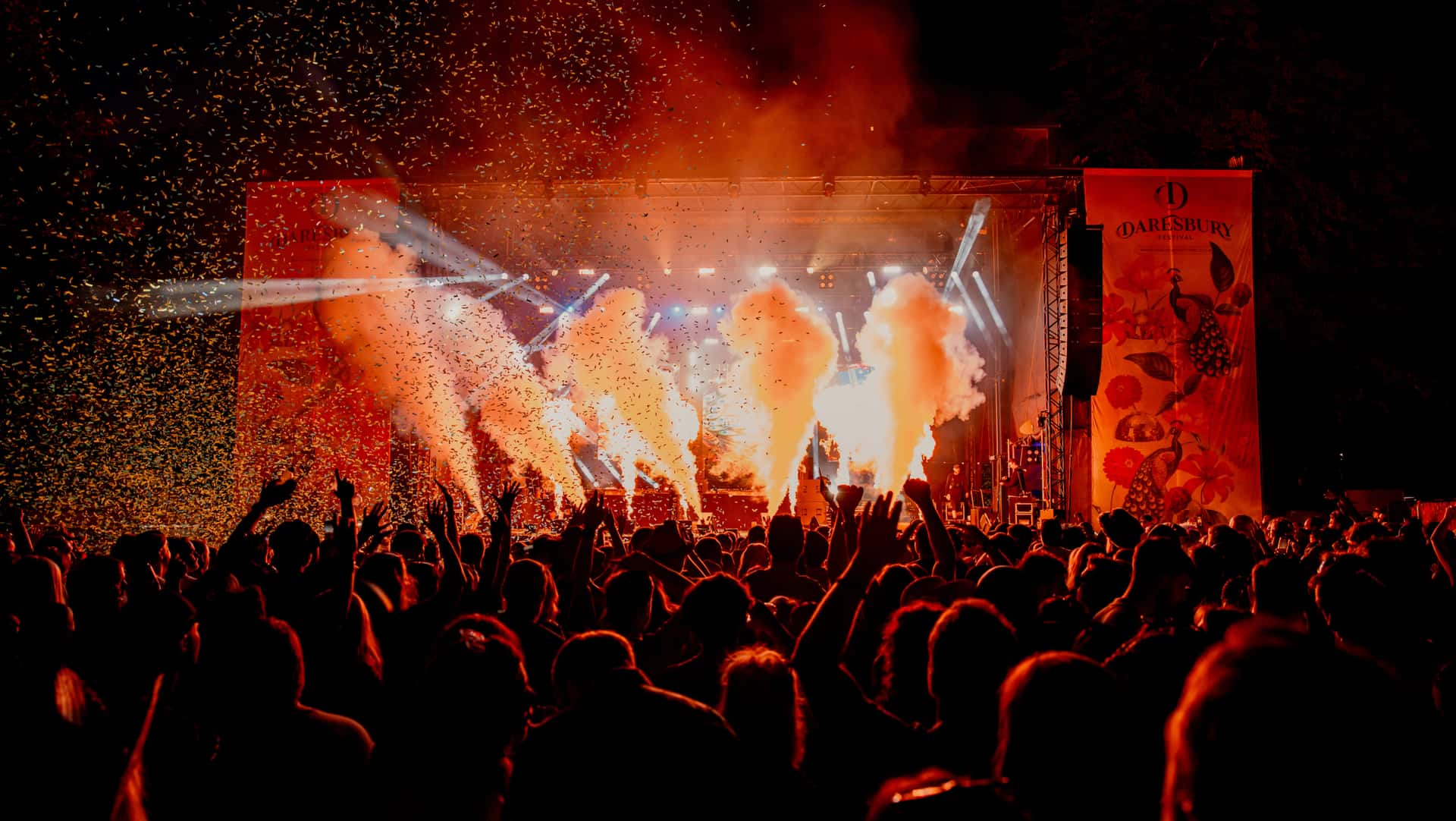
dBS Solutions provided sound reinforcement for the dance-focused Daresbury Festival at Walton Hall and Gardens in Warrington, Cheshire, with all three stages powered by Martin Audio systems.