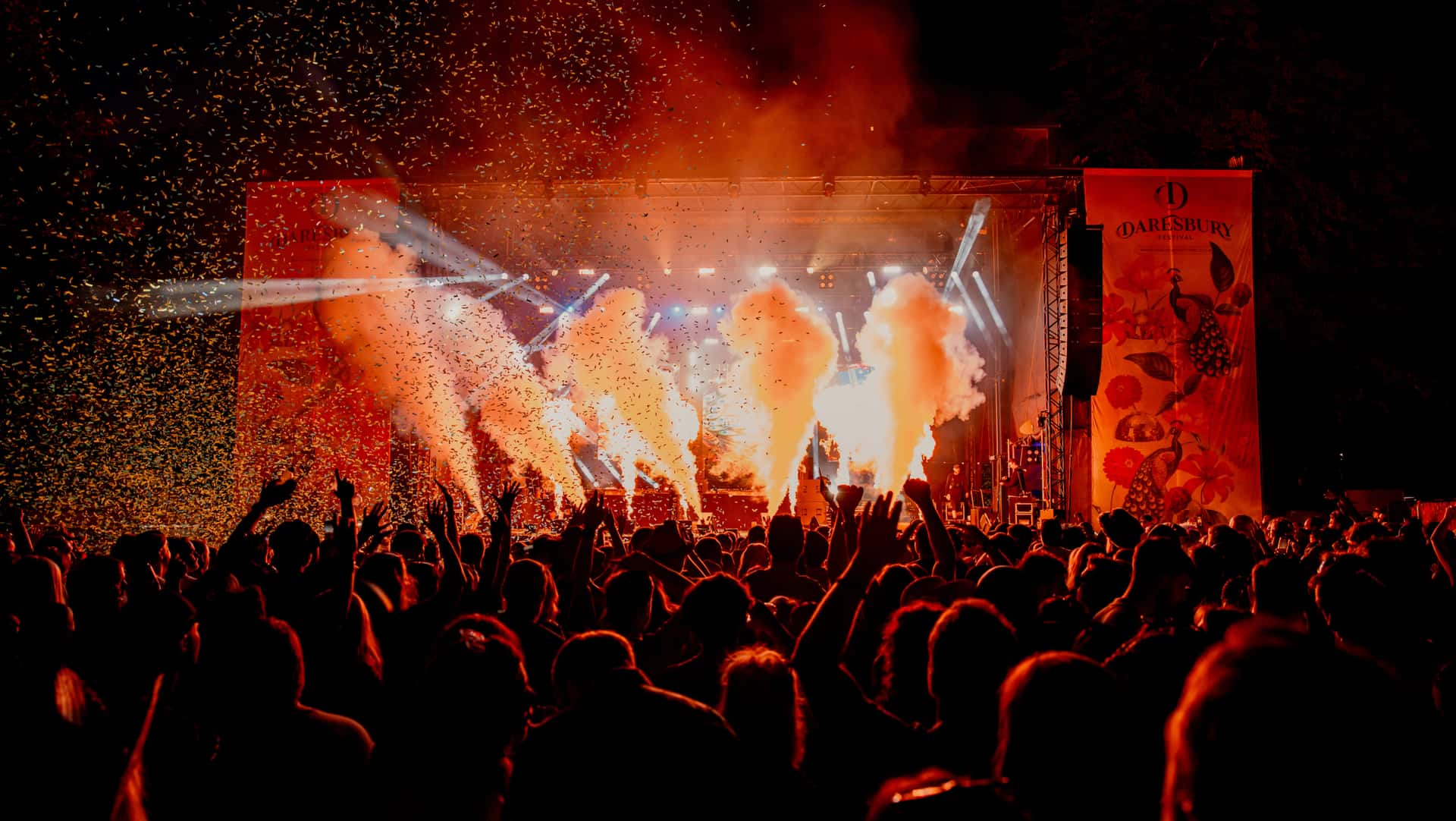
dBS Solutions enhances Daresbury Festival
dBS Solutions provided sound reinforcement for the dance-focused Daresbury Festival at Walton Hall and Gardens in Warrington, Cheshire, with all three stages powered by Martin Audio systems.


Radiohead is ambitious as ever. Image Universal Pixels
The 2025 Radiohead tour marked the alt-rock band’s first outing in nearly seven years. We cover the lighting, video and audio design that brought the 20-night tour to life
Words Katie Kasperson
Forty years ago, Thom Yorke, Colin and Jonny Greenwood, Ed O’Brien and Philip Selway formed On a Friday, an English band that would go on to become Radiohead and reshape the sound of alternative rock. Through nine studio albums, six Grammy awards, seven top ten UK singles and an induction into the Rock & Roll Hall of Fame, Radiohead’s had a long run – but it’s not over yet. In September 2025, the group announced a European tour and just two months later, that 20-nighter kicked off with four nights in Madrid to a sold-out arena of around 17,000 fans.
From Spain to Italy, England, Denmark and Germany, the 2025 Radiohead tour brought all five of the band’s founding members together – adding Chris Vatalaro on drums – for their first live performance in six years. Each venue supported their in-the-round-style staging – a ‘rarity’ for a concert tour, according to Hammy Patel, project manager at Universal Pixels. “There’s a lot of complexity that comes with putting those shows together,” he says. The company collaborated with Wonder Works on the tour’s visual tech, providing a bespoke solution made of mobile LED panels, cameras and media servers.
“Radiohead tours – they are different,” Patel suggests. “The creative decisions they tend to make around how their shows look are different from the norm.” And while he wasn’t involved in those decisions per se, Patel understood the band’s aims and found the tech needed to achieve them.
Universal Pixels has a long-standing relationship with ‘various guises of Radiohead’, according to Patel. “Last year, we put together Thom Yorke’s Everything tour; the year before, we also did The Smile,” he shares – the latter being a (relatively) new group formed by Yorke, Jonny Greenwood and drummer Tom Skinner.
The band approached Universal Pixels in April, when the 2025 Radiohead tour was still in ideation. “‘Radiohead might be looking to go out. This is what might happen. Can you keep your thinking caps on?’” Patel recalls hearing. “Towards the end of June, we got a spec list.”
Working with creative director Sean Evans, video director Ellie Clement and lighting designer Pryderi Baskerville, Patel had ‘a lot of existing relationships with a lot of people’. These connections proved critical when decisions were finalised in September – leaving just one month for Universal Pixels to source kit in time for rehearsals. “To pull that off with only a month after confirmation that this is going ahead and this is happening… that was the challenge.”

There was a 360° screen design made up of 12 Roe Visual Vanish V8 LED panels. Image Alex Lake
While Radiohead’s performance might have appeared simple – no walkways, acrobatics or pyrotechnics involved – it was far from it. “The whole system was running in 4K,” begins Patel, who sourced 26 cameras, including Blackmagic Micro G2s and Panasonic PTZs. The G2s “were used in static positions, mostly around keyboards, pianos and drums. They were meant to be hidden,” he says.
The PTZs provided movement. “Four of them were on-track cameras, two of them were on heads to go up and down, so there was a lot of movement without having a manned person blocking the audience’s view,” he explains. “Everything needed to be minimalistic.”
Balancing a total of 26 camera feeds meant dealing with ‘a lot of data’, according to Patel, “and a lot of signals that needed to go back and forth. If you think about the conventional stage, there is always space below or around it where the video department might set up their system. But that wasn’t the case here,” he stresses.
Instead, Universal Pixels and the video team established three distinct areas: ‘Video World’ or back of house, front of house and the stage itself. “We had to link between all three areas, had to have the signals going from the stage back to Video World to front of house, etc. Carrying that many signals without going over budget was a big challenge.” The team deployed Disguise GX 3 media servers to do the job.
The video feeds then populated the band’s 360° screen design, made up of 12 Roe Visual Vanish V8 LED panels for a meshy, transparent look that wouldn’t obstruct any sightlines. “When the show starts, the screen is on the deck,” notes Patel, “and the band appears behind the screen before it’s lifted. The screens were fully automated – they’d go up and down and rotate on their own axes,” creating a continuously shifting visual playground.
The lighting team had to consider the staging, set and video design, working around the dynamic LED panels as well as the audio arrays. Developed by Baskerville, they installed 136 moving lights that could execute 12m flight animations both inside and outside the 360° performance area. Kinetic Lights provided 60 Winch XL systems – both single and clustered units – plus 60 KL Gyro motion stabilisers. The team synced and controlled equipment in real time via Kinetic Lights’ KLC software.
“From our point of view,” Patel reiterates, “this was the most complex system that we’ve ever put together. Universal Pixels is eight years old now, and this was the heaviest show – from a video standpoint.”


The show was mixed on the Yamaha Rivage PM10 with the DSP-RX. Image Alex Lake
Simon Hodge, FOH engineer, agrees. “Doing an in-the-round tour is bold and creative, and the sound design had to match that,” he says. “We tried our best to make it sound as intimate as possible despite the large areas we’re covering.” Hodge joined technical projects manager Josh Lloyd, systems engineer Giacomo Gasparini and monitor engineer Daniel Scheiman for the band’s European outing, with audio equipment supplied by Britannia Row, a Clair Global company.
In-the-round audio, like video, comes with its obstacles – when sound is firing in all directions, it can create reflections and bounce back to the source (in this case, the stage). “The geometry at the bottom and top of the array can be tricky, where one hang meets another,” Lloyd explains. The audio team opted for the L-Acoustics L2 as the PA, which helped ‘minimise the amount of spill’.
Together, they designed a custom central rigging frame, suspending four hangs of L-Acoustics KS21 subs to free up floor space. Known as the TM Array, after the engineer Thomas Mundorf, the design created consistent tonal balance across the audience as well as in the round. As Lloyd explains, “When you’re at the bottom of the array, you experience cancellation. However, as you move further away from it onto the area floor and up into the seats, you benefit from the summation of the sources. The band is situated directly below the cluster,” he continues, “where it creates cancellation – so on stage, there’s no pocket of noise.”
Radiohead’s discography is sometimes quiet (like the softer Fake Plastic Trees), sometimes loud (like the swells in Creep or Let Down). “When they do perform the quieter songs,” says Lloyd, “the level difference at the very back of the venue is very small in relation to the floor.”
Building on the experience gained on Thom Yorke's solo tour, Hodge continued to use a fully Dante-based system for Radiohead, connecting “14 Rupert Neve Designs RMP-D8s and a PM10 surface at both ends,” he shares. “I can’t stress how important live sound is to them. With Radiohead, audio is their number one priority – and a wonderful luxury for us. Everyone loved the sound.”
Scheiman mixed the show on the Yamaha Rivage PM10 with the DSP-RX. “We went with Yamaha on this for the sonic quality and onboard effects, and the DSP-RX was essential for the channel count we were running,” he describes, also adding Wisycom IEMs and M4 wedges. “It was a pretty incredible show to mix. From the first day of rehearsals up until the last song of the last show was performed, there was never a dull moment,” Scheiman admits.
Being in the round also meant, for Scheiman, being backstage – a first for him. “Not being at the side of the stage provided some challenges for sure – not being able to feel the energy of the room and not having a direct line of sight with the band for quick, easy adjustments. Fortunately, we had such a great system of talkbacks and camera feeds, it all helped to keep me clued in.” Britannia Row provided comms and data services – including solutions from Riedel and Motorola – via its brand, Surfhire.
Radiohead’s 2025 tour was a success, impressing music critics, satisfying fans and even breaking the O2 Arena’s attendance record during the band’s final night of their four-day residency. Beyond the numbers, the lighting, video and audio teams’ hard work paid off too. “They’re energetic and their set takes many forms,” Hodge says. Touring in the round was a radical move but Radiohead has never been one to fit the norm.


Three distinct areas were created. Image Universal Pixels
This article was first published in the Spring 2026 issue of LIVE.
dBS Solutions provided sound reinforcement for the dance-focused Daresbury Festival at Walton Hall and Gardens in Warrington, Cheshire, with all three stages powered by Martin Audio systems.
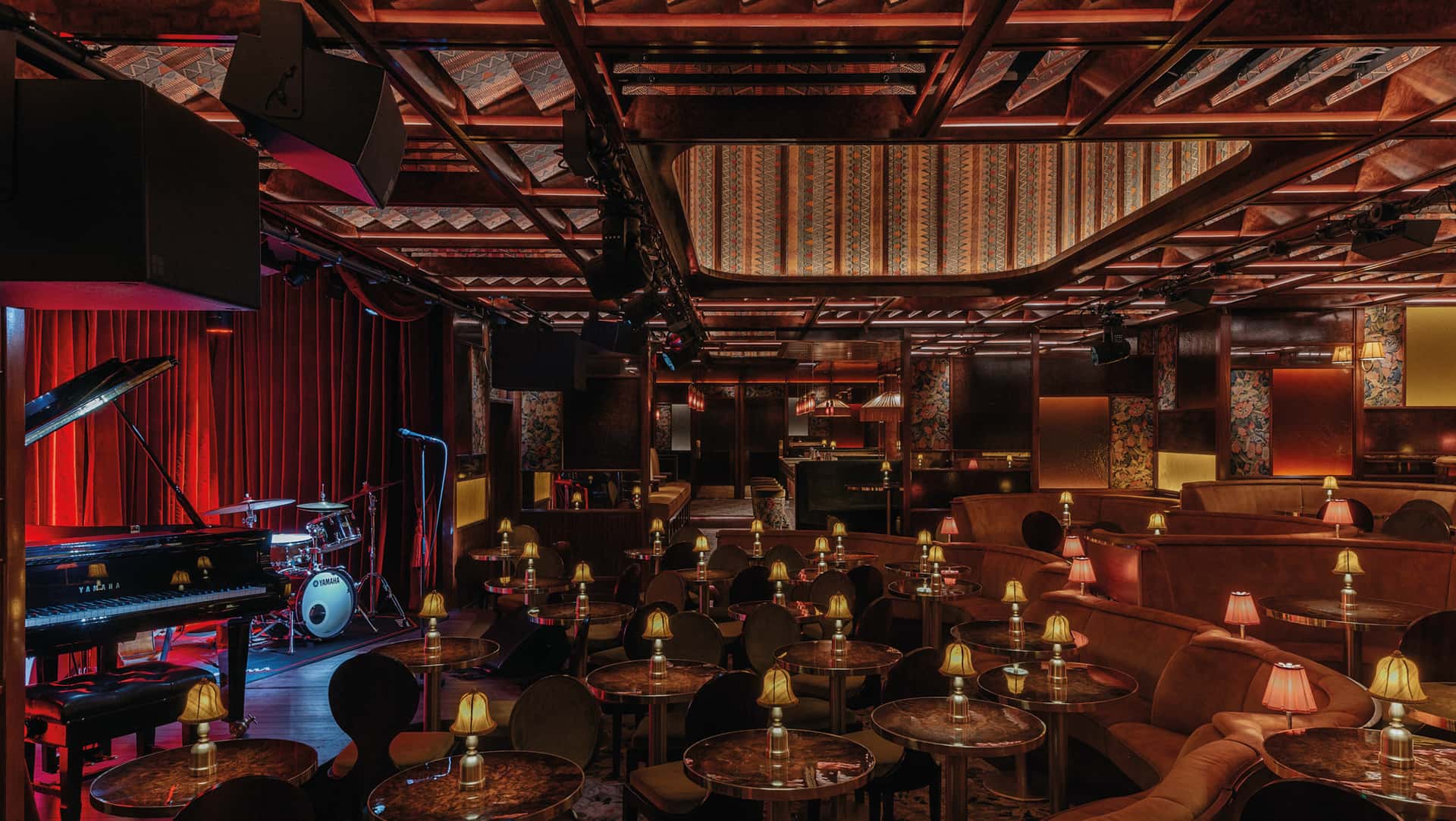
When your venue has welcomed everyone from Miles Davis to Amy Winehouse, standing still isn’t an option. The most recent Ronnie Scott’s redevelopment proves even an icon can evolve
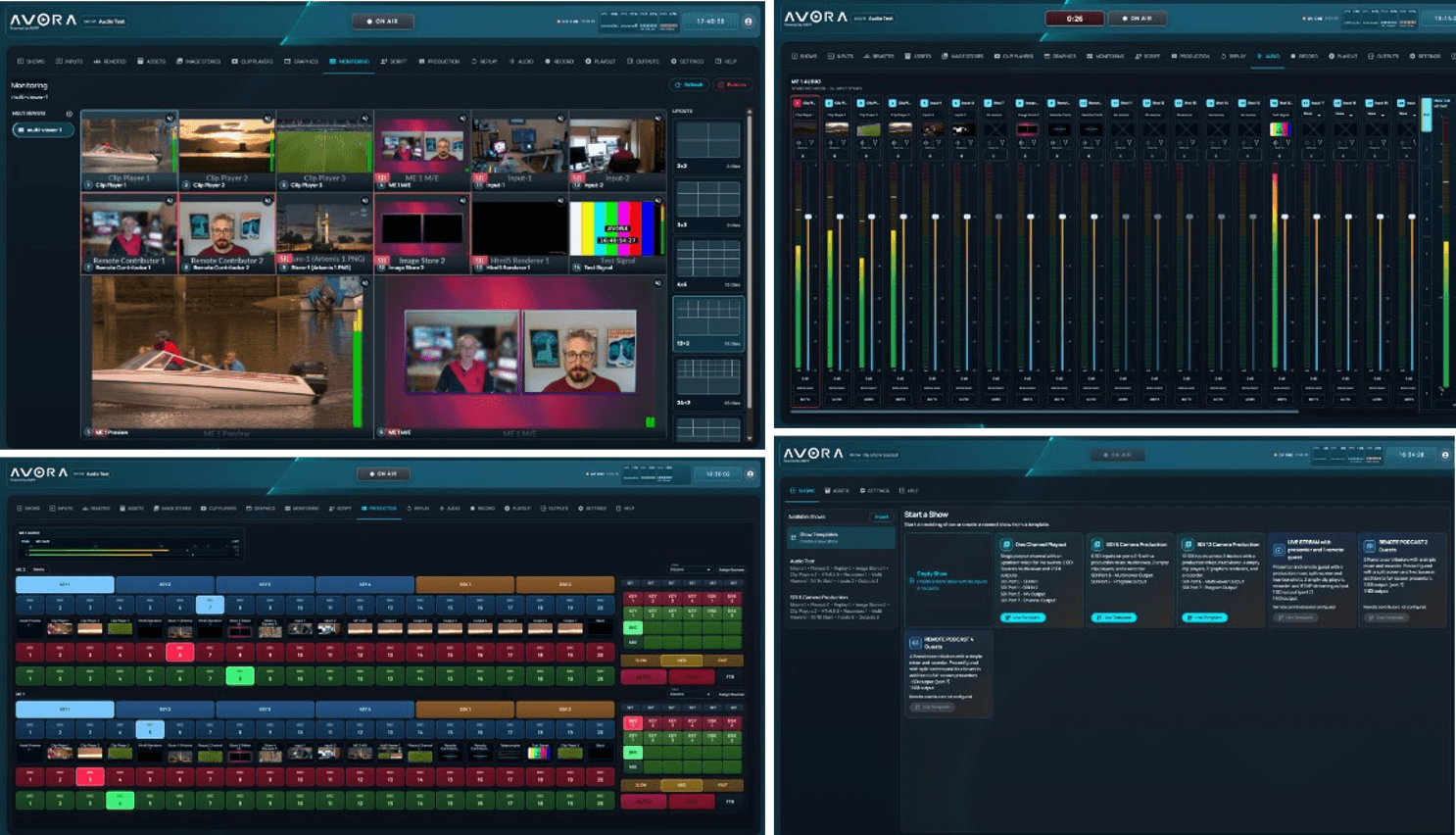
Launched at IBC2026, AVORA gives production teams a complete environment to prepare, produce and deliver live content, from switching and graphics to audio, remote guests, content, replay and delivery.

Tim Burton’s cult classic Beetlejuice has found new life on stage. But recreating its surreal world takes much more than clever costumes and scary set designs

Recently acquired by Panasonic, Hive is entering a versatile new era. CTO Dave Green sits down with LIVE to discuss what this move means for the wider pro AV industry